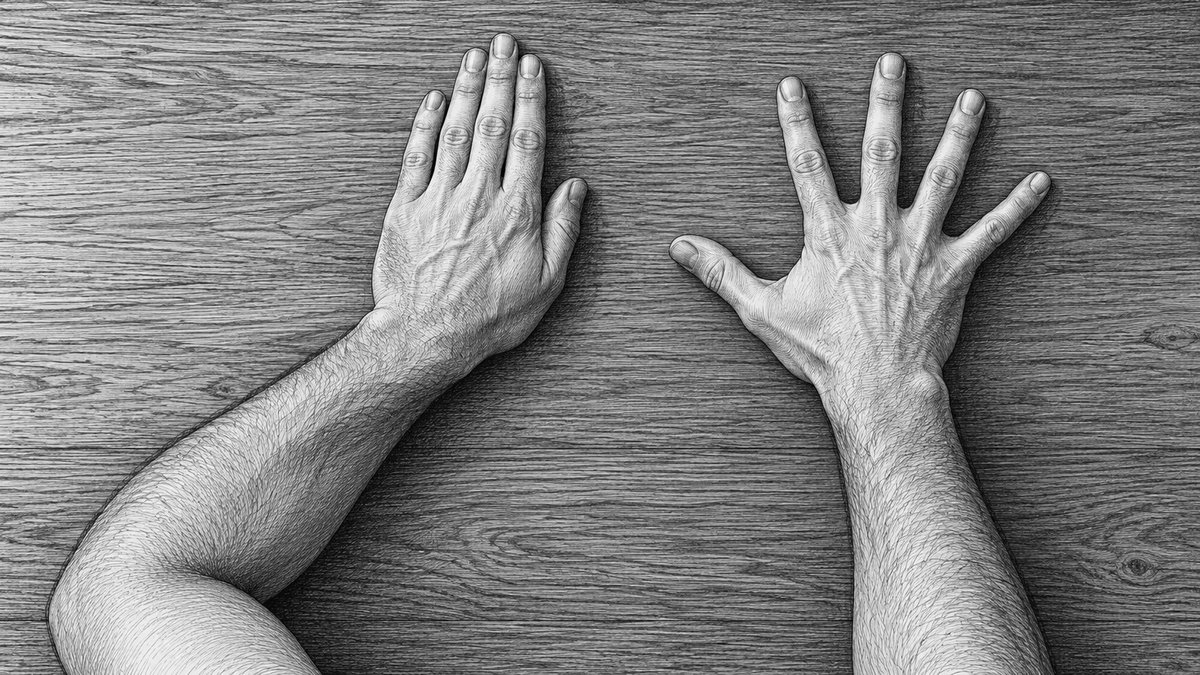
The oldest way to measure is with your own body. Hold up one finger: that is a finger. Lay four fingers side by side: that is a handbreadth. Spread your hand wide, from the tip of your thumb to the tip of your little finger: that is a span. Bend your arm and measure from your elbow to the tip of your middle finger: that is a cubit.
These four measures fit together. Four fingers make a handbreadth. Three handbreadths make a span. Two spans make a cubit. So one cubit is six handbreadths, or twenty-four fingers.
Because every person’s arm is a little different, a cubit was never exactly the same everywhere. That is why the Bible sometimes says “the cubit of a man,” meaning an ordinary man’s forearm. Ezekiel, in a vision of a new temple, sees a longer cubit: an ordinary cubit plus one extra handbreadth.