Reading and Writing in Scripture

The Bible names the people who wrote things down, the people who read them aloud, and what they wrote on. This page gathers them in one place, each with its verses.

Pick a part, then a card.

Part I tells each time the text says Scripture was read aloud, from Sinai to the churches. Part II names the people who wrote. Part III shows what they wrote on and with. Part IV gives the names the verses use for the writings. Every line is in the American Standard Version’s own words, with a link to the verse.

Part I

Scripture read aloud

Most people heard Scripture read to them. Thirteen accounts.

Today most people read the Bible alone, silently, from a book of their own. For most of history that was not how people met Scripture. Books were written by hand, one at a time, so very few people owned one. Most people heard Scripture read aloud: to the whole nation at a feast, to a king in his palace, in the synagogue every sabbath, or in a church gathered in someone’s house.

The Bible itself tells many of these readings. This part goes through them in order, from Moses at Mount Sinai to the letters of the apostles. In almost every one, the reading is for everyone: men, women, children and foreigners.

Moses reads the book of the covenantAt Mount Sinai. Exodus 24.

At Mount Sinai, God gave Moses the laws that are written in Exodus 20 to 23. Moses wrote them all down. Early the next morning he built an altar at the foot of the mountain, with twelve stone pillars for the twelve tribes.

Then he took the book he had written, called “the book of the covenant,” and read it aloud to the people. A covenant is a binding agreement. When the people heard it, they answered: all that God has spoken, we will do. This is the first time the Bible tells of a book being read to the people.

In the verses

  • “And Moses wrote all the words of Jehovah” (Exodus 24:4). Open the verse
  • “And he took the book of the covenant, and read in the audience of the people” (Exodus 24:7). Open the verse
The reading every seventh yearA law to read the Law (Torah) to everyone.

Before he died, Moses wrote down the Law (Torah) and gave it to the priests. He also gave a command about reading it. Every seventh year, at the Feast of Tabernacles, when all Israel came together, the Law was to be read aloud to everyone.

He lists who should hear it: the men, the women, the little ones, and the foreigner living among them. He gives the reason: so that they may hear, learn, fear God, and keep his words, and so that their children, who had not known it, could hear it too.

In the verses

  • “thou shalt read this law before all Israel in their hearing” (Deuteronomy 31:11). Open the verse
  • “Assemble the people, the men and the women and the little ones, and thy sojourner that is within thy gates, that they may hear, and that they may learn” (Deuteronomy 31:12). Open the verse
  • When: “At the end of every seven years, in the set time of the year of release, in the feast of tabernacles” (Deuteronomy 31:10). Open the verse
Joshua reads at Mount EbalThe whole Law (Torah), to the whole people. Joshua 8.

After Israel crossed the Jordan River into the land, Joshua did what Moses had commanded. At Mount Ebal, near Shechem, he built an altar and wrote a copy of the Law of Moses on stones in front of the people.

Then, with half the tribes standing in front of Mount Gerizim and half in front of Mount Ebal, he read all the words of the Law, the blessings and the curses. The Bible says he did not leave out one word of everything Moses commanded, and that he read it to the whole assembly, including the women, the little ones, and the foreigners who lived among them.

In the verses

  • “And he wrote there upon the stones a copy of the law of Moses” (Joshua 8:32). Open the verse
  • “There was not a word of all that Moses commanded, which Joshua read not before all the assembly of Israel, and the women, and the little ones, and the sojourners that were among them.” (Joshua 8:35). Open the verse
The book found in the templeIn the days of King Josiah. 2 Kings 22–23.

Josiah became king of Judah at eight years old. By his time, the Law had been neglected for so long that it had been lost. In his eighteenth year, workers repairing the temple found a scroll. Hilkiah the high priest called it “the book of the law” and gave it to Shaphan the scribe, who read it.

Shaphan took it to the king and read it aloud to him. When Josiah heard the words, he tore his clothes in grief, because the nation had not been keeping them. He sent to ask a prophetess, Huldah, what it meant.

Then Josiah gathered everyone, the priests, the prophets and all the people from the least to the greatest, went up to the temple, and read the whole book to them himself. He made a covenant to keep it, and he removed the idols from the land.

In the verses

  • “I have found the book of the law in the house of Jehovah. And Hilkiah delivered the book to Shaphan, and he read it.” (2 Kings 22:8). Open the verse
  • “And Shaphan read it before the king.” (2 Kings 22:10). Open the verse
  • “when the king had heard the words of the book of the law, that he rent his clothes” (2 Kings 22:11). Open the verse
  • Then the king read it to everyone: “both small and great: and he read in their ears all the words of the book of the covenant” (2 Kings 23:2). Open the verse
Teachers sent out with the bookIn the days of King Jehoshaphat.

Jehoshaphat was king of Judah. In the third year of his reign he sent out officials, Levites and priests to teach the people. They took the book of the Law with them, and travelled from city to city through all of Judah, teaching it.

In the verses

  • “And they taught in Judah, having the book of the law of Jehovah with them; and they went about throughout all the cities of Judah, and taught among the people.” (2 Chronicles 17:9). Open the verse
Baruch reads Jeremiah’s scroll; the king burns itJeremiah 36.

In the fourth year of King Jehoiakim, God told Jeremiah to write on a scroll every message he had given him, from the days of King Josiah until that day. Jeremiah spoke the words, and his scribe Baruch wrote them down.

Jeremiah was barred from going to the temple, so he sent Baruch to read the scroll aloud there on a fast day, when people from all over Judah would be gathered. Baruch read it from a room in the temple court in front of all the people.

Some officials heard it and were afraid. They told Baruch and Jeremiah to go and hide. Then the scroll was brought to the king. It was winter, and Jehoiakim was sitting by a fire in a brazier, a metal fire pot. As a man named Jehudi read, every time he finished three or four columns, the king cut them off with a knife and threw them into the fire, until the whole scroll was burned.

God told Jeremiah to take another scroll and write it all again. Baruch wrote it a second time, from Jeremiah’s mouth, and many more words were added.

In the verses

  • Jeremiah could not go to the temple, so he sent Baruch: “go thou, and read in the roll, which thou hast written from my mouth” (Jeremiah 36:6). Open the verse
  • “Then read Baruch in the book the words of Jeremiah in the house of Jehovah” (Jeremiah 36:10). Open the verse
  • The scroll was taken to King Jehoiakim: “And Jehudi read it in the ears of the king” (Jeremiah 36:21). Open the verse
  • “when Jehudi had read three or four leaves, that the king cut it with the penknife, and cast it into the fire that was in the brazier, until all the roll was consumed” (Jeremiah 36:23). Open the verse The ASV’s margin reads “columns” for “leaves.”
  • So it was written again: “Then took Jeremiah another roll, and gave it to Baruch the scribe” (Jeremiah 36:32). Open the verse “and there were added besides unto them many like words” (Jeremiah 36:32). Open the verse
Seraiah reads in BabylonA scroll read, then sunk in the Euphrates. Jeremiah 51.

Jeremiah wrote in a book all the disaster that would come on Babylon. He gave it to Seraiah, an officer who was travelling to Babylon with King Zedekiah.

His instructions: when you get to Babylon, read all these words aloud. When you finish, tie a stone to the book and throw it into the middle of the Euphrates River, and say, “Thus shall Babylon sink, and shall not rise again.”

In the verses

  • “And Jeremiah wrote in a book all the evil that should come upon Babylon” (Jeremiah 51:60). Open the verse
  • “When thou comest to Babylon, then see that thou read all these words” (Jeremiah 51:61). Open the verse
  • “when thou hast made an end of reading this book, that thou shalt bind a stone to it, and cast it into the midst of the Euphrates” (Jeremiah 51:63). Open the verse
Ezra reads to the peopleFrom early morning until midday. Nehemiah 8.

After the exile, the Jews who had come back from Babylon rebuilt the walls of Jerusalem. Then, on the first day of the seventh month, all the people gathered in the square before the Water Gate. They asked Ezra the scribe to bring the book of the Law of Moses.

Ezra stood on a wooden platform built for the purpose, above the people, with thirteen men beside him. When he opened the book, all the people stood up. He read from early morning until midday, to the men and the women and everyone who could understand, and all the people listened.

The Levites helped. They read from the book clearly and explained the meaning, so that the people understood what was read. The people wept when they heard the words. The leaders told them not to weep, because the day was holy, but to eat, drink, share with those who had nothing, and rejoice.

During the Feast of Tabernacles that followed, Ezra read from the book every day for seven days. A few weeks later the people met again, and spent a quarter of the day listening to the Law read and another quarter confessing their sins.
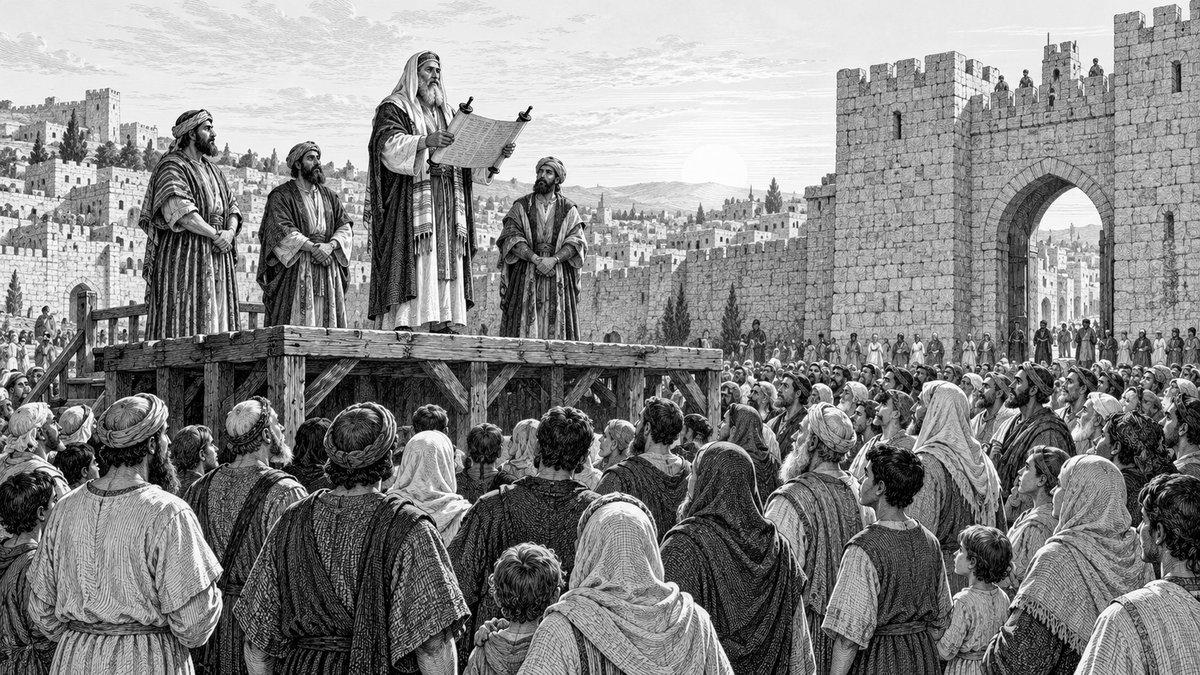
Drawing: Ezra reading the Law from a wooden platform to the people
Drawing: Ezra reading the Law from a wooden platform to the people. An ink drawing made for Open Scroll, not a picture from the time.

In the verses

  • “And Ezra the priest brought the law before the assembly, both men and women, and all that could hear with understanding” (Nehemiah 8:2). Open the verse
  • “And he read therein before the broad place that was before the water gate from early morning until midday” (Nehemiah 8:3). Open the verse
  • “And Ezra the scribe stood upon a pulpit of wood, which they had made for the purpose” (Nehemiah 8:4). Open the verse
  • “and when he opened it, all the people stood up” (Nehemiah 8:5). Open the verse
  • “And they read in the book, in the law of God, distinctly; and they gave the sense, so that they understood the reading.” (Nehemiah 8:8). Open the verse
  • Every day of the feast: “Also day by day, from the first day unto the last day, he read in the book of the law of God.” (Nehemiah 8:18). Open the verse
  • A few weeks later: “and read in the book of the law of Jehovah their God a fourth part of the day” (Nehemiah 9:3). Open the verse
Records read to a Persian kingOn a sleepless night. Esther 6.

In the book of Esther, the king of Persia could not sleep one night. He ordered the royal record book, the chronicles of his reign, to be brought and read to him.

The reader came to the place where Mordecai had uncovered a plot by two guards to kill the king. The king asked what had been done to honour Mordecai. The answer was: nothing. That one reading in the night turned the whole story of Esther.

In the verses

  • “On that night could not the king sleep; and he commanded to bring the book of records of the chronicles, and they were read before the king.” (Esther 6:1). Open the verse
Yeshua (Jesus) reads in NazarethFrom the scroll of Isaiah. Luke 4.

Yeshua came back to Nazareth, where he grew up. On the sabbath he went into the synagogue, as he always did, and stood up to read. The attendant handed him the scroll of the prophet Isaiah.

He unrolled it, found the place, and read the passage that begins “The Spirit of the Lord is upon me.” Then he rolled the scroll up, gave it back to the attendant, and sat down. Every eye in the synagogue was on him. He said: “To-day hath this scripture been fulfilled in your ears.”

This is the only time the Gospels describe Yeshua reading. It shows how a synagogue reading worked: a man stood to read from a scroll handed to him, and sat down to teach.

In the verses

  • “he entered, as his custom was, into the synagogue on the sabbath day, and stood up to read” (Luke 4:16). Open the verse
  • “And there was delivered unto him the book of the prophet Isaiah. And he opened the book, and found the place where it was written” (Luke 4:17). Open the verse The ASV’s margin: “Or, a roll.”
  • “And he closed the book, and gave it back to the attendant, and sat down” (Luke 4:20). Open the verse
  • “And he began to say unto them, To-day hath this scripture been fulfilled in your ears.” (Luke 4:21). Open the verse

The passage he read

“The Spirit of the Lord Jehovah is upon me; because Jehovah hath anointed me to preach good tidings unto the meek; he hath sent me to bind up the broken-hearted, to proclaim liberty to the captives, and the opening of the prison to them that are bound;”

Isaiah 61:1 (ASV). Open the verse

Read every sabbathIn the synagogues of the first century.

In the first century, Jewish communities all over the Roman world had synagogues, meeting houses where people gathered on the sabbath. A regular part of every meeting was the reading of Scripture: first from the Law (Torah), then from the Prophets.

Acts shows this. In Antioch of Pisidia, after the reading of the Law and the Prophets, the synagogue leaders invited Paul and his companions to speak. At the council in Jerusalem, James said that Moses was read in the synagogues of every city every sabbath.

In the verses

  • “And after the reading of the law and the prophets the rulers of the synagogue sent unto them” (Acts 13:15). Open the verse
  • “For Moses from generations of old hath in every city them that preach him, being read in the synagogues every sabbath.” (Acts 15:21). Open the verse
  • “the voices of the prophets which are read every sabbath” (Acts 13:27). Open the verse
A traveller reading aloudThe Ethiopian official on the Gaza road. Acts 8.

An official from Ethiopia, the treasurer of the queen, had come to Jerusalem to worship. On his way home, he sat in his chariot reading the prophet Isaiah aloud.

Philip, one of the seven men chosen in Acts 6 to serve the church, was told by the Spirit to go up to the chariot. He heard the man reading, and asked: “Understandest thou what thou readest?” The man answered, “How can I, except some one shall guide me?” and invited Philip to sit with him. Philip explained the passage, and the official was baptized by the road.

In the verses

  • “and he was returning and sitting in his chariot, and was reading the prophet Isaiah” (Acts 8:28). Open the verse
  • Philip heard him: “And Philip ran to him, and heard him reading Isaiah the prophet, and said, Understandest thou what thou readest?” (Acts 8:30). Open the verse
Letters read to the churchesThe apostles’ letters were meant to be read aloud.

The letters of the apostles were written to be read aloud to the whole church, not kept by one person.

When the council in Jerusalem sent a letter to the believers in Antioch, the messengers gathered everyone together and delivered it, and when it was read, the people rejoiced. Paul told the church in Colossae to read his letter and then send it on to Laodicea, and to read the letter he had sent there. He charged the Thessalonians to read his letter to all the believers. He told Timothy to give attention to the public reading of Scripture.

The book of Revelation begins with a blessing on “he that readeth” and on “they that hear”: one person reading aloud, and many listening.

In the verses

  • The letter from the Jerusalem council: “having gathered the multitude together, they delivered the epistle” (Acts 15:30). Open the verse “And when they had read it, they rejoiced for the consolation.” (Acts 15:31). Open the verse
  • “And when this epistle hath been read among you, cause that it be read also in the church of the Laodiceans; and that ye also read the epistle from Laodicea.” (Colossians 4:16). Open the verse
  • “I adjure you by the Lord that this epistle be read unto all the brethren.” (1 Thessalonians 5:27). Open the verse
  • “Till I come, give heed to reading, to exhortation, to teaching.” (1 Timothy 4:13). Open the verse
  • “Blessed is he that readeth, and they that hear the words of the prophecy” (Revelation 1:3). Open the verse

Back to top

Part II

People who wrote

From the tablets of stone to Paul’s own hand.

The Bible names many of the people who did the writing. Some were leaders like Moses and Joshua. Some were prophets. Some were professional scribes, men trained to write who served kings and prophets. In the New Testament, the letters show that apostles often spoke their letters while a helper wrote them down, then added a greeting in their own hand.

This part goes through them, from the tablets of stone at Sinai to the last letters of the New Testament.

The tablets of stoneWritten, the text says, by God.

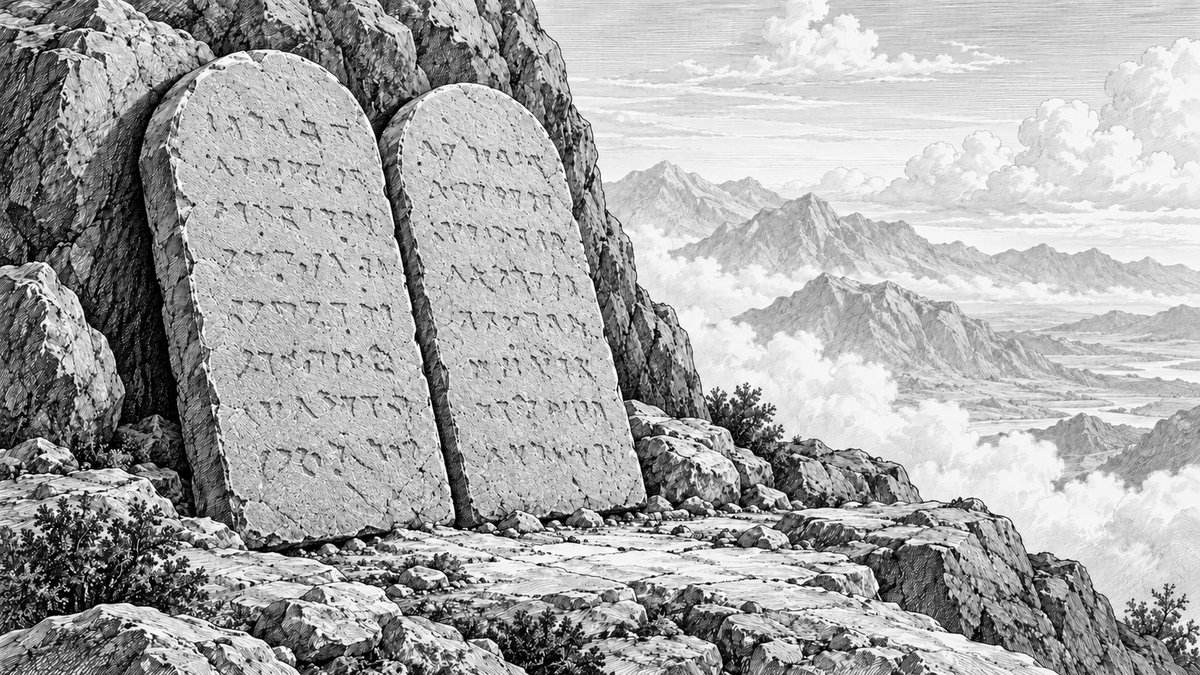
At Mount Sinai, God gave Moses two tablets of stone with the Ten Commandments on them. Exodus says they were written with the finger of God, on both sides.

When Moses came down and found the people worshipping a golden calf, he threw the tablets down and broke them at the foot of the mountain. God told him to cut two new tablets like the first, and the words were written on them again. These tablets were kept in the ark of the covenant.

Drawing: two tablets of stone on the mountain
Drawing: two tablets of stone on the mountain. An ink drawing made for Open Scroll, not a picture from the time.

In the verses

  • “the two tables of the testimony, tables of stone, written with the finger of God” (Exodus 31:18). Open the verse
  • “And the tables were the work of God, and the writing was the writing of God, graven upon the tables.” (Exodus 32:16). Open the verse
  • After Moses broke them: “Hew thee two tables of stone like unto the first” (Exodus 34:1). Open the verse
MosesThe first writer the Bible names.

Moses is the first person the Bible names as writing. After the battle with Amalek, God told him to write it in a book as a memorial. At Sinai he wrote down all the words of God. At the end of his life, he wrote the whole Law in a book.

He gave it to the Levites who carried the ark of the covenant, and told them to put the book beside the ark, as a witness. It was kept with the most holy object in Israel.

In the verses

  • “Write this for a memorial in a book” (Exodus 17:14). Open the verse
  • “And Moses wrote this law, and delivered it unto the priests the sons of Levi” (Deuteronomy 31:9). Open the verse
  • “when Moses had made an end of writing the words of this law in a book, until they were finished” (Deuteronomy 31:24). Open the verse
  • “Take this book of the law, and put it by the side of the ark of the covenant” (Deuteronomy 31:26). Open the verse
Every king, his own copyA law for the kings of Israel.

The Law of Moses looks ahead to a time when Israel would have a king. It gives one rule about the king and books: when he sits on his throne, he must write out his own copy of the Law, from the copy kept by the priests.

He was to keep it with him and read it all the days of his life, so that he would learn to fear God, keep the commandments, and not think himself better than his brothers.

In the verses

  • “that he shall write him a copy of this law in a book” (Deuteronomy 17:18). Open the verse
  • “and it shall be with him, and he shall read therein all the days of his life” (Deuteronomy 17:19). Open the verse
Joshua and SamuelWriting in the book, and laying it up.

At the end of his life Joshua gathered the tribes at Shechem and had them renew their covenant with God. He wrote the words in the book of the Law of God, and set up a large stone under an oak as a witness.

Centuries later, when Saul was made the first king of Israel, Samuel explained to the people the rights and duties of the king. He wrote them in a book and laid it up before God.

In the verses

  • “And Joshua wrote these words in the book of the law of God” (Joshua 24:26). Open the verse
  • “Then Samuel told the people the manner of the kingdom, and wrote it in a book, and laid it up before Jehovah.” (1 Samuel 10:25). Open the verse
Scribes of the kingsA royal office.

Kings had scribes, officials who wrote letters, kept records and handled the royal accounts. David’s chief officials included a scribe named Seraiah. The ASV’s margin also calls the office “secretary.”

Generations later, Shaphan was King Josiah’s scribe. It was Shaphan who read the newly found book of the Law to the king. His sons and grandsons also appear in the book of Jeremiah.

In the verses

  • Under David: “and Seraiah was scribe” (2 Samuel 8:17). Open the verse The ASV’s margin: “Or, secretary.”
  • Under Josiah: “Shaphan, the son of Azaliah the son of Meshullam, the scribe” (2 Kings 22:3). Open the verse
Prophets told to writeIsaiah, Jeremiah and Habakkuk.

Prophets mostly spoke their messages aloud. But God also told several of them to write.

Isaiah was told to write a message on a tablet and in a book, so that it would last for the time to come. Jeremiah was told to write all his messages on a scroll. Habakkuk was told to write his vision plainly on tablets, “that he may run that readeth it.” Daniel wrote down his dreams and visions.

In the verses

  • “write it before them on a tablet, and inscribe it in a book, that it may be for the time to come for ever and ever” (Isaiah 30:8). Open the verse
  • “Take thee a roll of a book, and write therein all the words that I have spoken unto thee” (Jeremiah 36:2). Open the verse
  • “Write the vision, and make it plain upon tablets, that he may run that readeth it.” (Habakkuk 2:2). Open the verse
  • Daniel: “then he wrote the dream and told the sum of the matters” (Daniel 7:1). Open the verse
Baruch, Jeremiah’s scribeHe wrote from Jeremiah’s mouth.

Baruch son of Neriah was Jeremiah’s scribe and friend. Jeremiah spoke, and Baruch wrote.

When officials asked Baruch how he had written the scroll, he answered that Jeremiah spoke all the words to him, and he wrote them with ink in the book. After the king burned the first scroll, Baruch wrote it all again. Jeremiah 45 is a short message from God to Baruch himself.

In the verses

  • “and Baruch wrote from the mouth of Jeremiah all the words of Jehovah” (Jeremiah 36:4). Open the verse
  • “He pronounced all these words unto me with his mouth, and I wrote them with ink in the book.” (Jeremiah 36:18). Open the verse
Ezra the scribeA scribe in the Law of Moses.

Ezra was a priest and a scribe who lived in Babylon during the exile. The Bible calls him “a ready scribe in the law of Moses”: someone who knew the Law thoroughly.

He set his heart to study the Law, to do it, and to teach it in Israel. The king of Persia sent him to Jerusalem with gifts for the temple and authority to teach the Law. He is the scribe who read the Law to the people in Nehemiah 8.

In the verses

  • “And he was a ready scribe in the law of Moses” (Ezra 7:6). Open the verse
  • “For Ezra had set his heart to seek the law of Jehovah, and to do it, and to teach in Israel statutes and ordinances.” (Ezra 7:10). Open the verse
LukeHe says why and how he wrote.

Luke begins his Gospel by telling his reader, a man named Theophilus, how and why he wrote. Many others had already written accounts of Yeshua’s life. Luke says he carefully traced everything from the beginning, and wrote it in order, so that Theophilus could be sure of what he had been taught.

The book of Acts is addressed to the same Theophilus.

In the verses

  • “many have taken in hand to draw up a narrative” (Luke 1:1). Open the verse
  • “having traced the course of all things accurately from the first, to write unto thee in order, most excellent Theophilus” (Luke 1:3). Open the verse
JohnThe Gospel and Revelation say who wrote them.

The Gospel of John ends by saying who wrote it: the disciple who was there and bore witness to these things. It also says why it was written: so that the readers may believe that Yeshua is the Christ, the Son of God, and have life in his name.

It adds that Yeshua did so many other things that the world could not hold the books if they were all written down. In Revelation, John is told again and again: “write.”

In the verses

  • “This is the disciple that beareth witness of these things, and wrote these things” (John 21:24). Open the verse
  • “but these are written, that ye may believe that Jesus is the Christ, the Son of God” (John 20:31). Open the verse
  • “I suppose that even the world itself would not contain the books that should be written” (John 21:25). Open the verse
  • “Write therefore the things which thou sawest” (Revelation 1:19). Open the verse
Paul and the men who held his penTertius, Silvanus, and Paul’s own hand.

Paul usually spoke his letters while a helper wrote. At the end of Romans the man holding the pen adds his own greeting: “I Tertius, who write the epistle.” Peter’s first letter says it was written “by Silvanus.”

Paul often took the pen at the end to add a greeting in his own handwriting. He told the Thessalonians this was the sign that a letter was really from him. To the Galatians he wrote, “See with how large letters I write unto you with mine own hand.” In the letter to Philemon he wrote a promise to pay a debt in his own hand, like signing an IOU.

In the verses

  • Paul’s letter to Rome names the man who wrote it down: “I Tertius, who write the epistle, salute you in the Lord.” (Romans 16:22). Open the verse
  • Peter’s first letter: “By Silvanus, our faithful brother, as I account him, I have written unto you briefly” (1 Peter 5:12). Open the verse
  • Paul often ends in his own hand: “See with how large letters I write unto you with mine own hand.” (Galatians 6:11). Open the verse
  • “The salutation of me Paul with mine own hand, which is the token in every epistle: so I write.” (2 Thessalonians 3:17). Open the verse
  • “I Paul write it with mine own hand, I will repay it” (Philemon 19). Open the verse
Yeshua writes on the groundThe only time the Gospels say he wrote.

The Gospels tell of only one time Yeshua wrote. The scribes and Pharisees brought him a woman caught in adultery and asked whether she should be stoned, as the Law said. Yeshua bent down and wrote on the ground with his finger.

When they kept asking, he stood up and said that whoever was without sin should throw the first stone. Then he bent down and wrote on the ground again. One by one they left. The text does not say what he wrote.

In the verses

  • “But Jesus stooped down, and with his finger wrote on the ground.” (John 8:6). Open the verse
  • “And again he stooped down, and with his finger wrote on the ground.” (John 8:8). Open the verse
  • The text does not say what he wrote.
Other writings in the storyA hand on a wall, a name on a tablet, a title on a cross.

Other writing appears in the stories. At Belshazzar’s feast in Babylon, the fingers of a hand wrote on the plaster of the palace wall, and only Daniel could read it.

When Zacharias, the father of John the Baptist, could not speak, he asked for a writing tablet and wrote: “His name is John.”

At the crucifixion, Pilate had a sign written and put on the cross: “Jesus of Nazareth, the King of the Jews.” It was written in three languages, Hebrew, Latin and Greek, and many people read it.

In the verses

  • In Babylon: “came forth the fingers of a man’s hand, and wrote over against the candlestick upon the plaster of the wall of the king’s palace” (Daniel 5:5). Open the verse
  • Zacharias, unable to speak: “And he asked for a writing tablet, and wrote, saying, His name is John.” (Luke 1:63). Open the verse
  • On the cross: “And there was written, Jesus of Nazareth, the King of the Jews.” (John 19:19). Open the verse “and it was written in Hebrew, and in Latin, and in Greek” (John 19:20). Open the verse

Back to top

Part III

What they wrote on and with

Stone, tablets, scrolls, ink and seals.

There was no paper as we know it, no pens with ink inside, and no printing. People wrote on stone, on clay, on wooden tablets, on papyrus made from a water plant, and on parchment made from animal skin. Long writings were made into scrolls: long strips rolled up on a stick. The bound book with pages came later.

The Bible names many of these materials and tools. This part shows what it says about each.

Stone and plasterThe oldest writing surfaces in the Bible.

Stone was the most lasting surface. When Israel crossed the Jordan, Moses commanded them to set up large stones, coat them with plaster, and write all the words of the Law on them very plainly. Joshua did this at Mount Ebal.

Job, in his suffering, wished his words could be cut into the rock with an iron pen and filled with lead, so that they would last forever.

In the verses

  • “thou shalt set thee up great stones, and plaster them with plaster” (Deuteronomy 27:2). Open the verse “And thou shalt write upon the stones all the words of this law very plainly.” (Deuteronomy 27:8). Open the verse
  • Job wishes his words were carved in rock: “That with an iron pen and lead They were graven in the rock for ever!” (Job 19:24). Open the verse
TabletsSmall, flat surfaces for writing.

A tablet was a small flat surface for writing, small enough to hold. God told Isaiah to take a large tablet and write a name on it in plain letters. Zacharias asked for a writing tablet when he could not speak.

Paul uses the tablets of stone from Sinai as a picture. He tells the Corinthians they are a letter written not with ink but with the Spirit of God, not on tablets of stone but on human hearts.

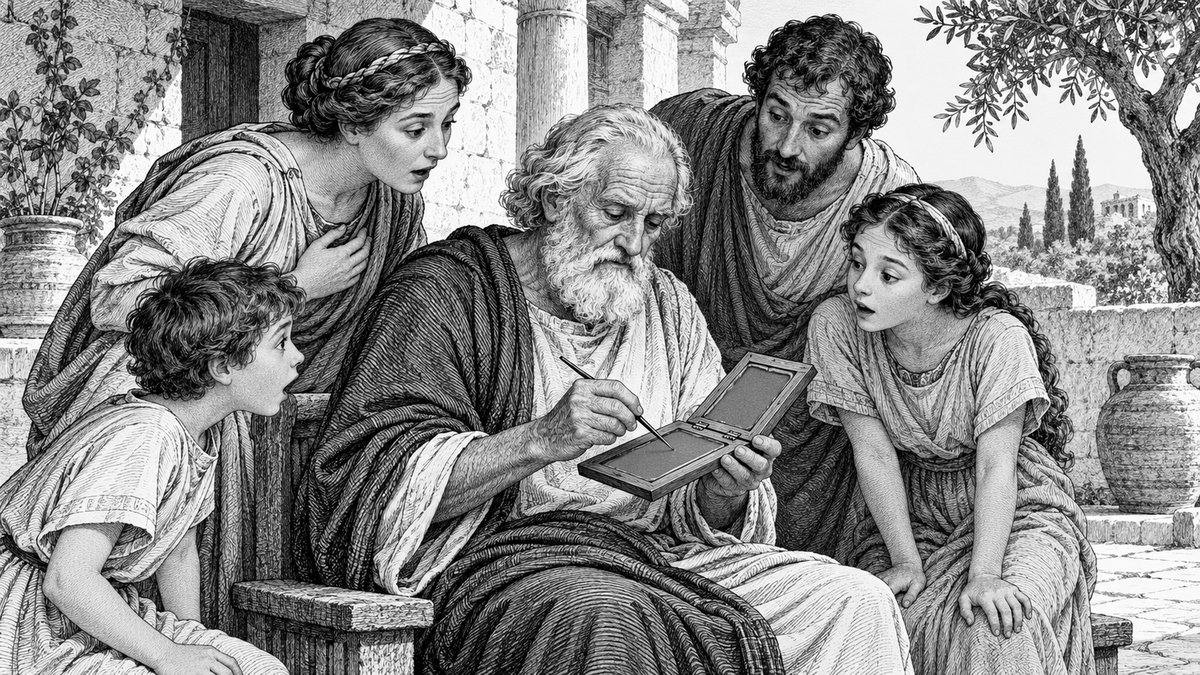
Drawing: Zacharias writing on a wax tablet
Drawing: Zacharias writing on a wax tablet. An ink drawing made for Open Scroll, not a picture from the time.
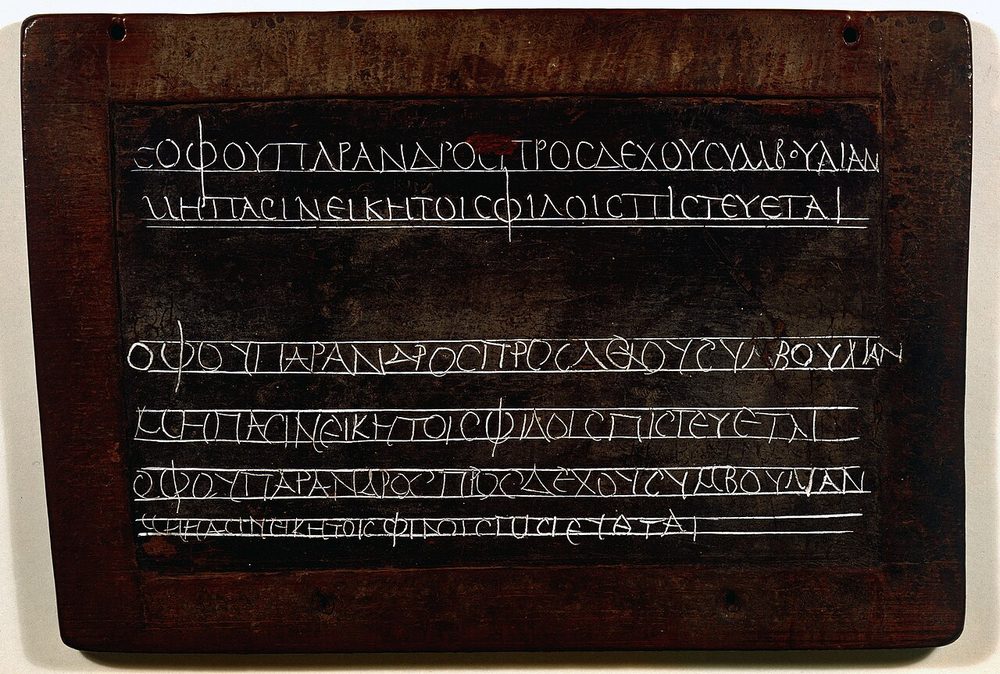
A wooden writing tablet with Greek letters scratched into dark wax
A Roman-era wax writing tablet, 2nd century A.D., British Library, London. Photograph: British Library, Wikimedia Commons, CC0.

In the verses

  • “Take thee a great tablet, and write upon it with the pen of a man” (Isaiah 8:1). Open the verse
  • “he asked for a writing tablet” (Luke 1:63). Open the verse
  • Paul uses the tablets as a picture: “written not with ink, but with the Spirit of the living God; not in tables of stone, but in tables that are hearts of flesh” (2 Corinthians 3:3). Open the verse
The scroll (roll of a book)A long strip rolled up, written in columns.

A scroll, which the ASV often calls “a roll of a book,” is a long strip of writing material rolled up. It was written in columns side by side. To read it, you unrolled it with one hand and rolled it up with the other. When the king burned Jeremiah’s scroll, he cut it off three or four columns at a time.

Most scrolls were written on one side only. In Ezekiel’s vision, and in Revelation, the scroll is written on both sides, front and back, as if there was too much to fit.

Zechariah saw a flying scroll twenty cubits long and ten cubits wide: about thirty feet by fifteen feet, the size of a large banner.

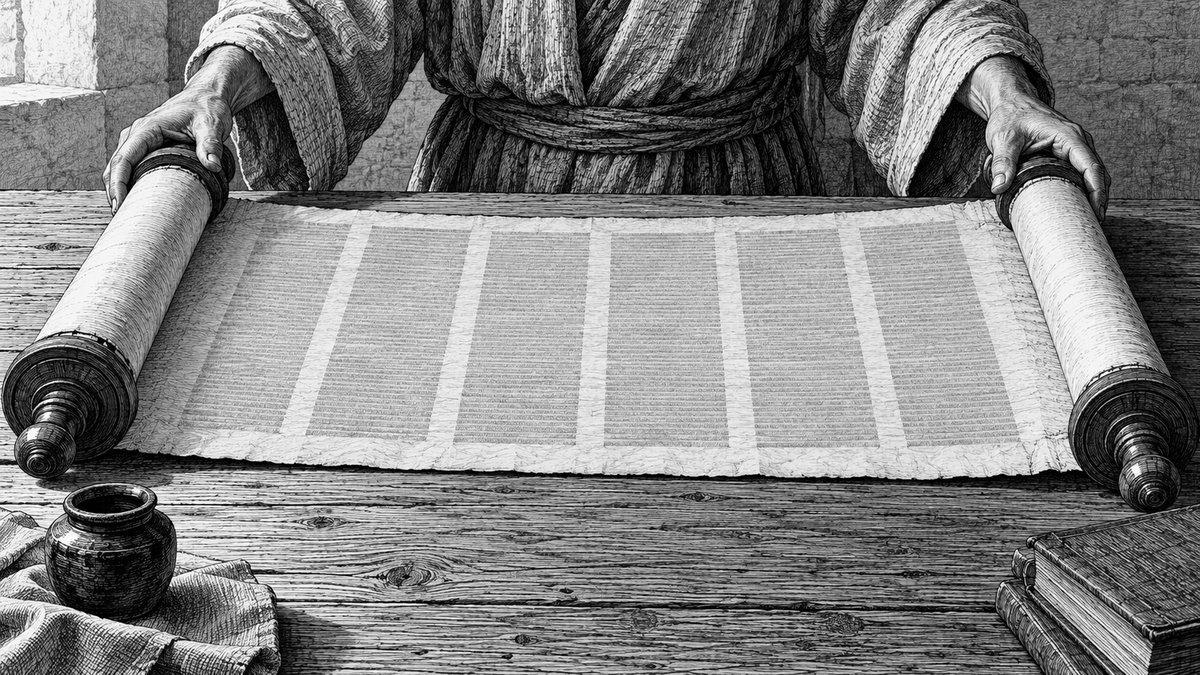
Drawing: a scroll unrolled to show its columns
Drawing: a scroll unrolled to show its columns. An ink drawing made for Open Scroll, not a picture from the time.
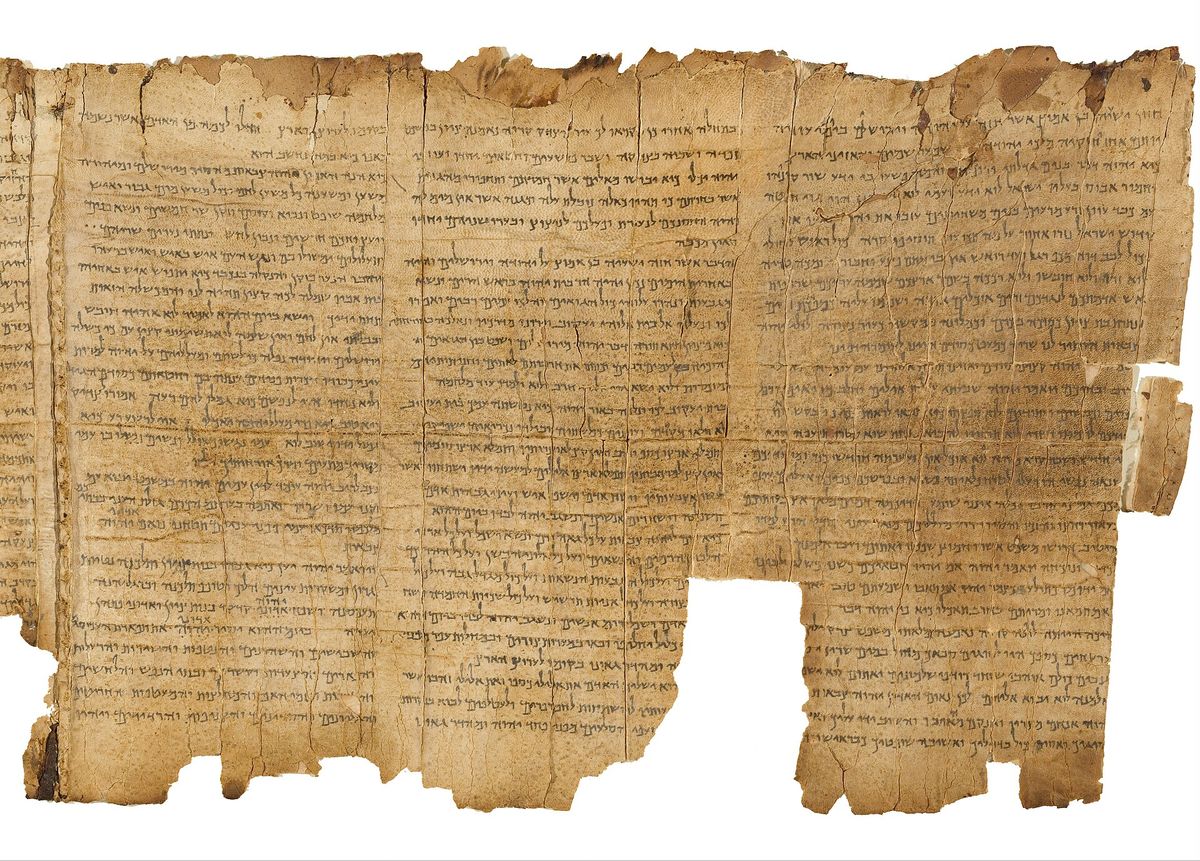
Part of the Great Isaiah Scroll: columns of Hebrew writing on worn leather
Part of the Great Isaiah Scroll, found at Qumran in 1947, Israel Museum, Jerusalem. Photograph from Google Arts & Culture, by way of Wikimedia Commons, public domain in the United States.

In the verses

  • “Take thee a roll of a book” (Jeremiah 36:2). Open the verse
  • Written on both sides: “and he spread it before me: and it was written within and without” (Ezekiel 2:10). Open the verse “a book written within and on the back, close sealed with seven seals” (Revelation 5:1). Open the verse
  • Zechariah’s vision: “I see a flying roll; the length thereof is twenty cubits, and the breadth thereof ten cubits” (Zechariah 5:2). Open the verse About 9 to 10.5 metres long and 4.5 to 5.3 metres wide (29 to 34 feet by 15 to 17 feet). See Weights, Measures and Money for the cubit.
  • “and the heavens shall be rolled together as a scroll” (Isaiah 34:4). Open the verse
  • Where the ASV prints “book,” its margin often adds “Or, roll” (Luke 4:17, 20).
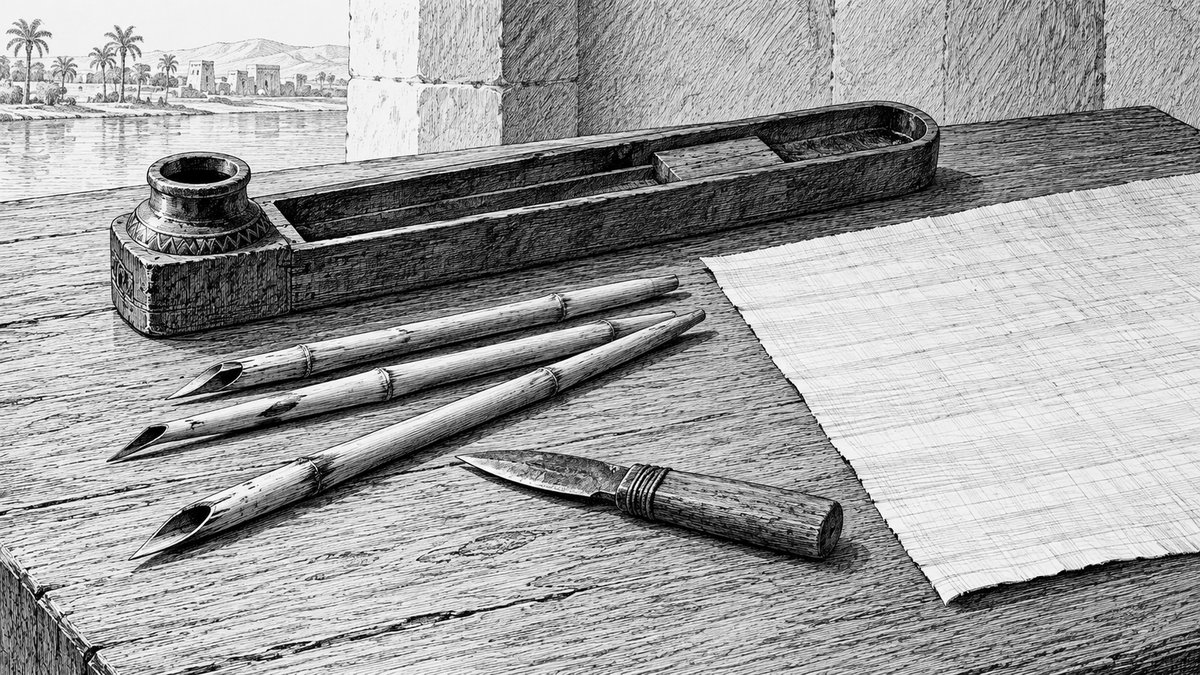
Pens and inkIron, diamond, reed and ink.

Jeremiah speaks of a pen of iron with a diamond point, used for cutting letters into hard surfaces. For writing on scrolls, scribes used ink and a pen. Ezekiel saw a man in linen with a writer’s inkhorn, a scribe’s case for ink and pens, at his side.

Baruch wrote Jeremiah’s words with ink. John, in his short letters, says he has much more to say but would rather not write it with paper and ink or with pen and ink; he hopes to come and talk face to face. A psalm compares the poet’s tongue to “the pen of a ready writer.”

Drawing: a scribe’s writing case with ink, reed pens and a knife
Drawing: a scribe’s writing case with ink, reed pens and a knife. An ink drawing made for Open Scroll, not a picture from the time.
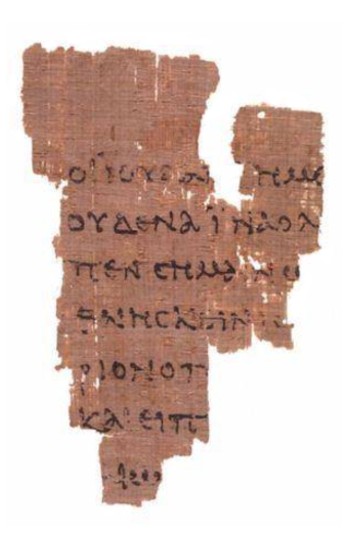
A small torn piece of papyrus with Greek letters
Papyrus 52, a scrap of John 18 written on papyrus, the “paper” of 2 John 12. John Rylands Library, Manchester. Photograph: John Rylands Library, Wikimedia Commons, public domain.

In the verses

  • “The sin of Judah is written with a pen of iron, and with the point of a diamond” (Jeremiah 17:1). Open the verse
  • “clothed in linen, with a writer’s inkhorn by his side” (Ezekiel 9:2). Open the verse
  • “and I wrote them with ink in the book” (Jeremiah 36:18). Open the verse
  • “I would not write them with paper and ink” (2 John 12). Open the verse
  • “I am unwilling to write them to thee with ink and pen” (3 John 13). Open the verse
  • “My tongue is the pen of a ready writer.” (Psalms 45:1). Open the verse
Books and parchmentsWhat Paul asked for in prison.

Parchment is a writing material made from animal skin. In his last letter, written from prison, Paul asks Timothy to bring his cloak and his books, “especially the parchments.” The letter does not say what was written on them.

In the verses

  • “and the books, especially the parchments” (2 Timothy 4:13). Open the verse
Seals and deedsWriting that could be checked later.

A seal was a carved stamp, often in a ring, pressed into soft clay or wax to close a document and show who sent it. Only someone with the seal could make that mark.

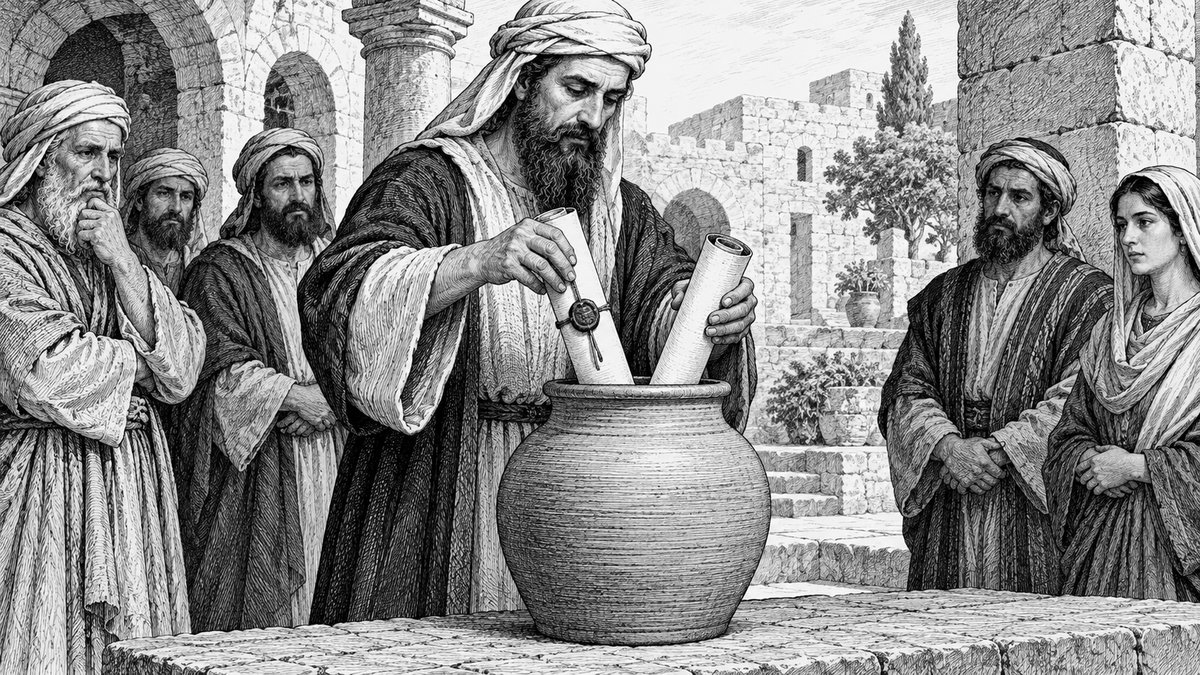
When Jeremiah bought his cousin’s field during the siege, he signed the deed, sealed it, called witnesses, and weighed out the money. Two copies were made: one sealed and one open. Both were put in a clay jar so they would last a long time.

In the Persian empire, a letter written in the king’s name and sealed with his ring could not be cancelled.

Drawing: a sealed deed and an open deed placed in a clay jar
Drawing: a sealed deed and an open deed placed in a clay jar. An ink drawing made for Open Scroll, not a picture from the time.

In the verses

  • Jeremiah’s purchase: “And I subscribed the deed, and sealed it, and called witnesses” (Jeremiah 32:10). Open the verse
  • Stored to last: “this deed of the purchase which is sealed, and this deed which is open, and put them in an earthen vessel; that they may continue many days” (Jeremiah 32:14). Open the verse
  • The Persian king’s seal: “for the writing which is written in the king’s name, and sealed with the king’s ring, may no man reverse” (Esther 8:8). Open the verse
Doorposts, sticks and the groundWriting in everyday places.

Writing was also part of everyday life. The Law told the people to write God’s words on the doorposts of their houses and on their gates. A man who divorced his wife had to write her a certificate of divorce and put it in her hand. Ezekiel was told to write the names of Judah and Joseph on two sticks and hold them together as one.

In the verses

  • “And thou shalt write them upon the door-posts of thy house, and upon thy gates.” (Deuteronomy 6:9). Open the verse
  • “take thee one stick, and write upon it, For Judah” (Ezekiel 37:16). Open the verse
  • A bill of divorce: “that he shall write her a bill of divorcement, and give it in her hand” (Deuteronomy 24:1). Open the verse
  • “with his finger wrote on the ground” (John 8:6). Open the verse

Back to top

Part IV

What Scripture calls itself

The names the verses use for the writings.

The Bible has several names for the Scriptures. Some name one part: “the law,” meaning the books of Moses. Some name two parts: “the law and the prophets.” In Luke 24, Yeshua names three: the law of Moses, the prophets and the psalms. These are close to the three parts of the Jewish Bible today: the Law (Torah), the Prophets and the Writings.

Back to top

↑Top