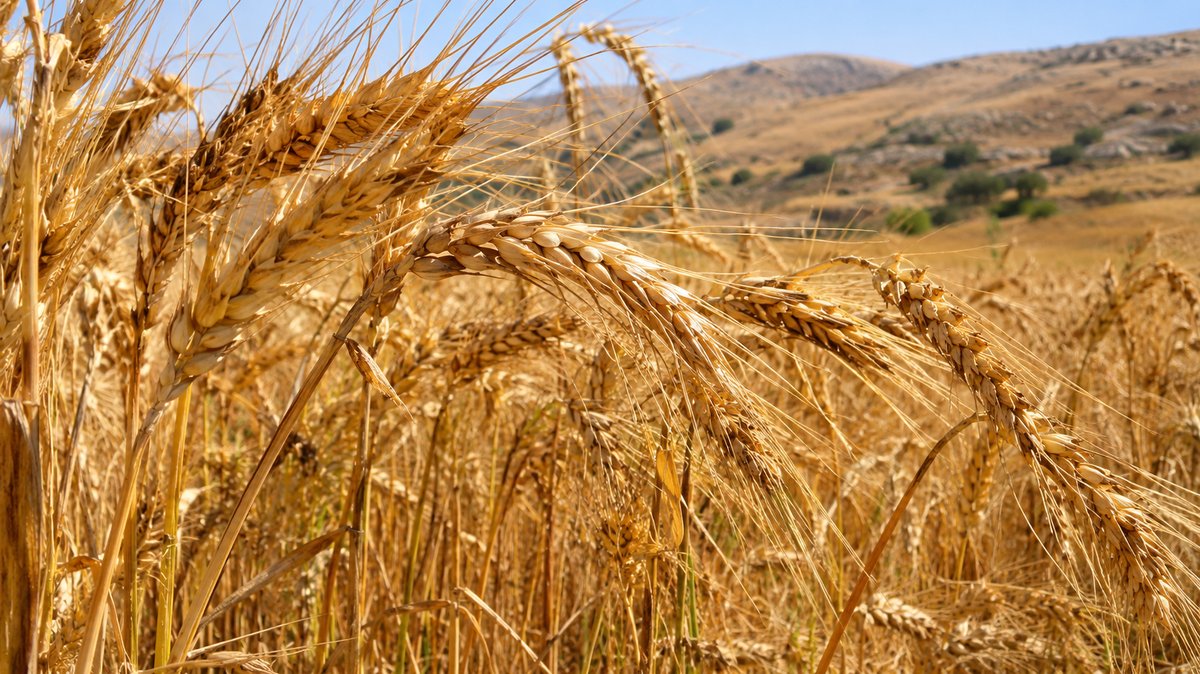
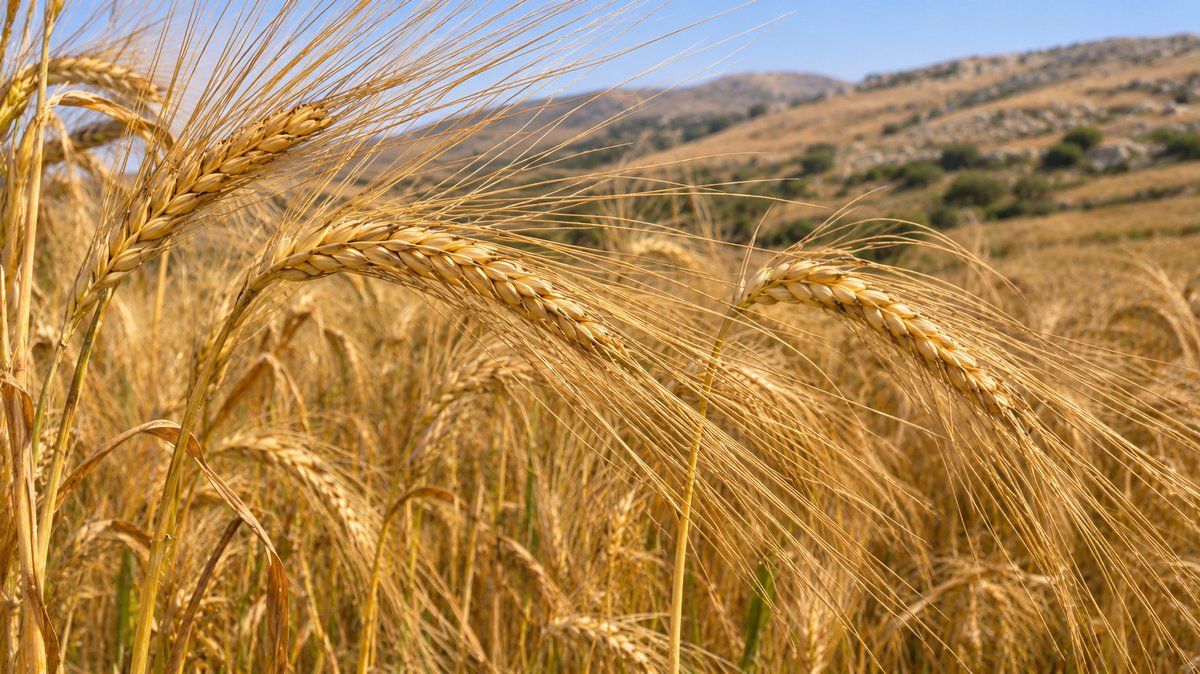
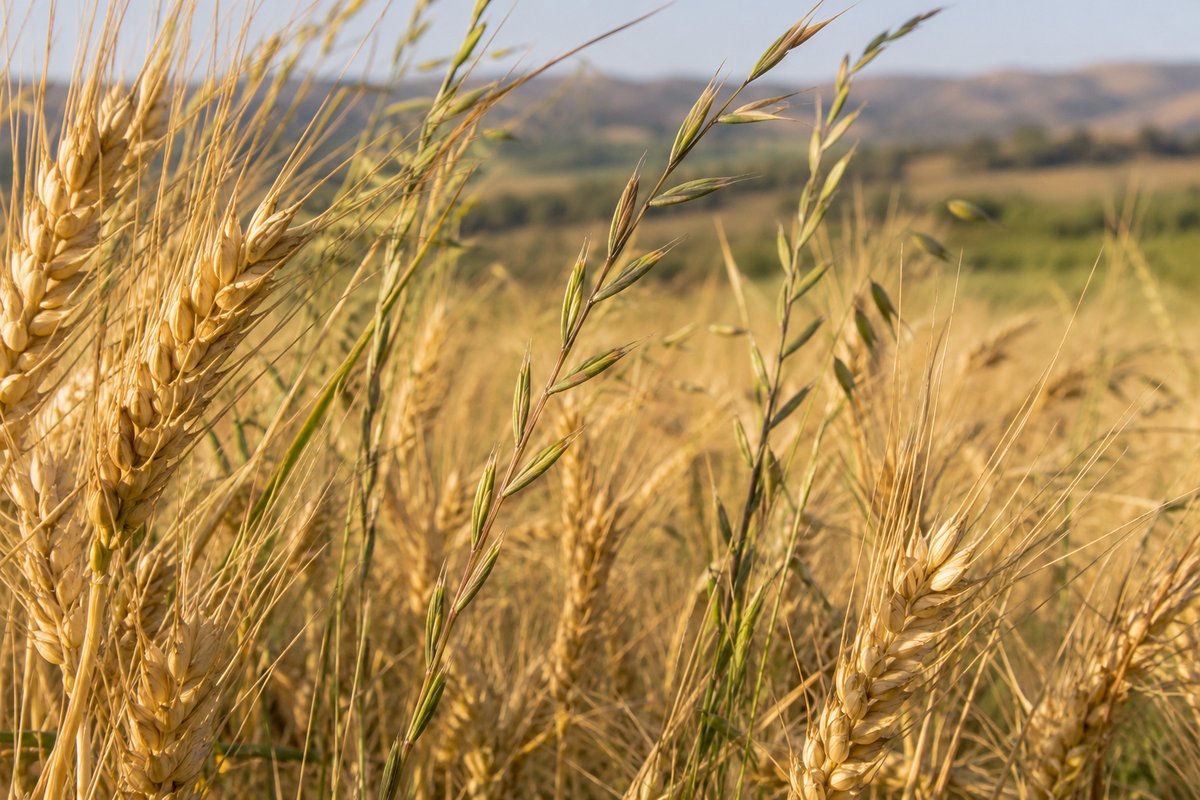
Wheat was the most important grain in the land. It was sown in the late autumn, after the first rains had softened the ground, and it grew through the cool, wet winter. It was harvested in late spring, about seven weeks after Passover. The Feast of Weeks (Pentecost) was the feast of the wheat harvest.
Harvest was hard work for the whole family. Men cut the stalks with a sickle and tied them in bundles. The bundles were carried to a threshing floor, a flat, hard space of rock or packed earth, where oxen walked over the grain or dragged a heavy wooden sledge across it to break the heads loose. Then the grain was thrown into the air with a wooden fork on a windy day. The wind blew the light chaff away and the heavy grain fell back to the floor. This is called winnowing.
The poor were allowed to follow the reapers and pick up what they left behind. This is called gleaning, and it is how Ruth met Boaz. Jesus used a single grain of wheat as a picture of his own death: a seed must be buried before it can bring a harvest.