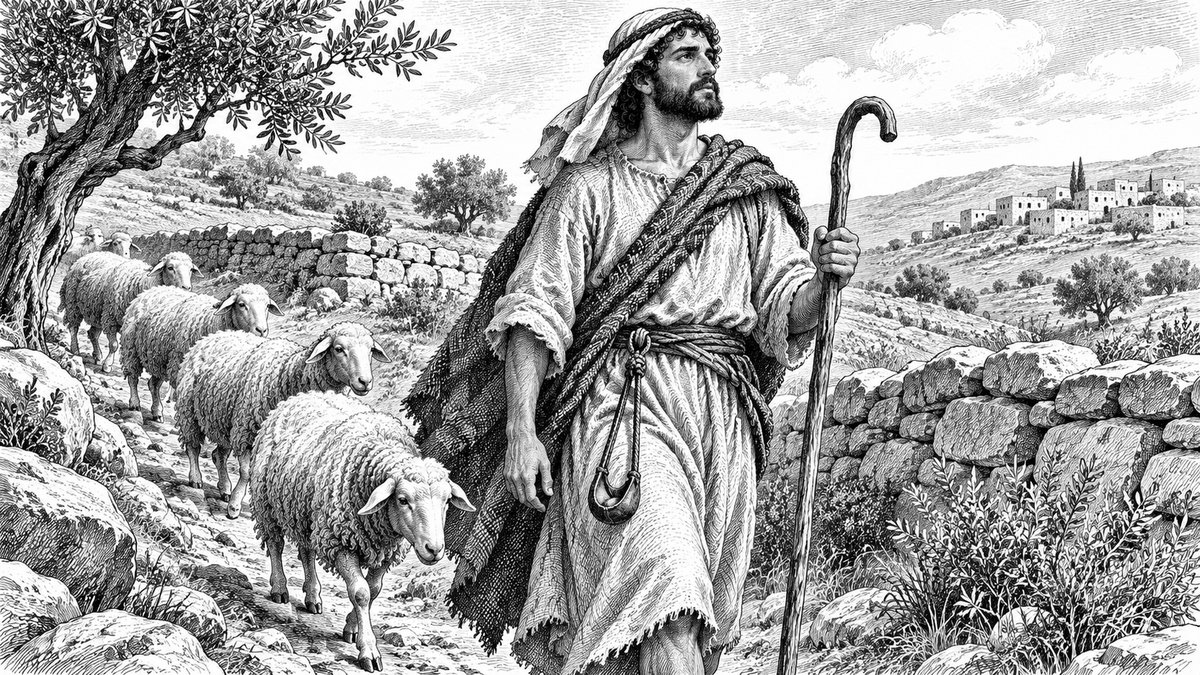
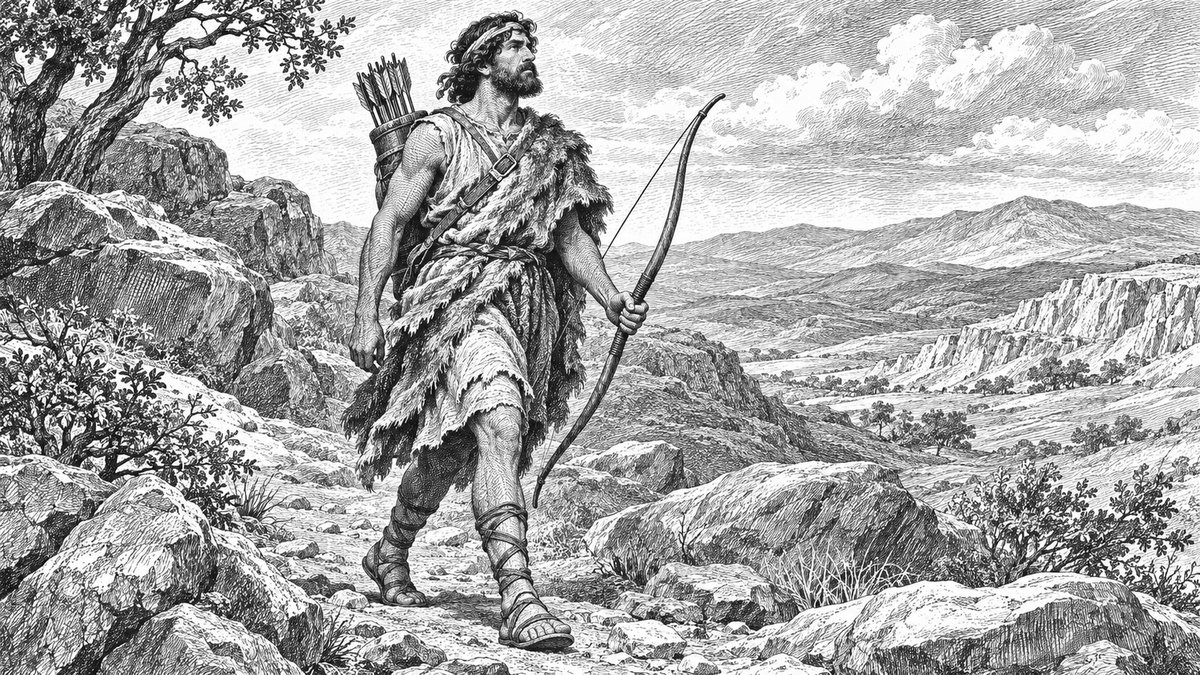
A shepherd kept sheep and goats, which gave milk, cheese, wool, meat and leather. He led the flock out each morning to find grass and water, often walking long distances in dry country, and brought them back at night to a fold: a ring of stone walls, sometimes against a cave, with one opening. In the Middle East shepherds led their flocks from the front; the sheep knew his voice and followed.
The work was hard and dangerous. Jacob, who kept his uncle Laban’s flocks for twenty years, said the heat wore him out by day and the frost by night, and he lost sleep. Wild animals were a real threat: David told Saul he had killed a lion and a bear to save lambs from his father’s flock. If an animal was lost, the shepherd might have to pay for it, unless he could bring back what was left as proof that a wild beast had taken it (Exodus 22:13).
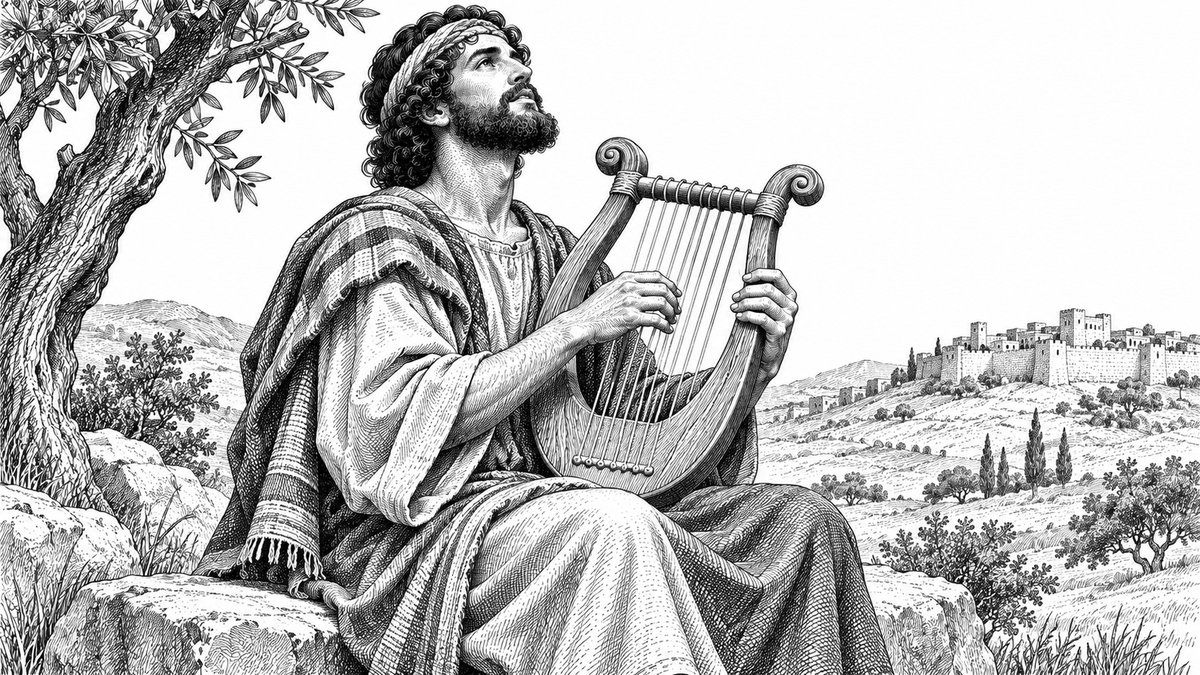
Many of the great leaders of Israel were shepherds: Abel, Abraham, Jacob, Rachel, Moses, and David, who was called from the sheep to be king. God himself is called the shepherd of his people, and Jesus called himself the good shepherd who lays down his life for the sheep. Luke records that shepherds keeping watch at night were the first to hear of his birth.