Historical Figures

Kings, governors and priests the Bible names who are also named in stone, in clay, or by other ancient writers. Each card sets what the Bible says beside what the other source says.

Pick a part, then a name.

Nineteen people, in three parts: the kings of Israel and Judah, the kings of the nations around them, and the leaders of the Roman period. Each card gives the verses that name the person, then the object or writing outside the Bible that names them: where it was found, what it says, and where it is now.

Part I

Kings of Israel and Judah

Named in stone and clay by their neighbours.

The Bible tells the history of the kings of Israel and Judah. Many of those kings are also named by their neighbours: by enemy kings who carved their victories in stone, by empires that kept lists on clay, and by the kings’ own seals.

After King Solomon died, about nine hundred years before Yeshua (Jesus), the kingdom split in two. The ten northern tribes became the kingdom of Israel, with its capital at Samaria. The southern tribes became the kingdom of Judah, with its capital at Jerusalem, ruled by kings from the family of David. Israel was conquered by Assyria about two hundred years later. Judah lasted until Babylon destroyed Jerusalem.

The cards in this part follow that history in order. Each one tells the person’s story from the Bible, then shows what an ancient object or writer outside the Bible says about the same person.

DavidKing of Israel. Named on a stone from Tel Dan.

David was the youngest son of Jesse from Bethlehem, a shepherd boy who killed the giant Goliath and became Israel’s greatest king. He made Jerusalem his capital and brought the ark of the covenant there. The Bible says he was thirty when he became king and that he reigned forty years.

God promised David that his family would rule after him, and for more than four hundred years every king of Judah came from his line. The Bible calls that royal family “the house of David.”

For a long time no writing outside the Bible was known that named David. Then, in 1993, pieces of a broken stone were found at Tel Dan in the far north of Israel. The stone was set up by an enemy king of Aram (Syria) about a hundred and fifty years after David. In it he boasts of beating the king of Israel and the king of “the House of David.”
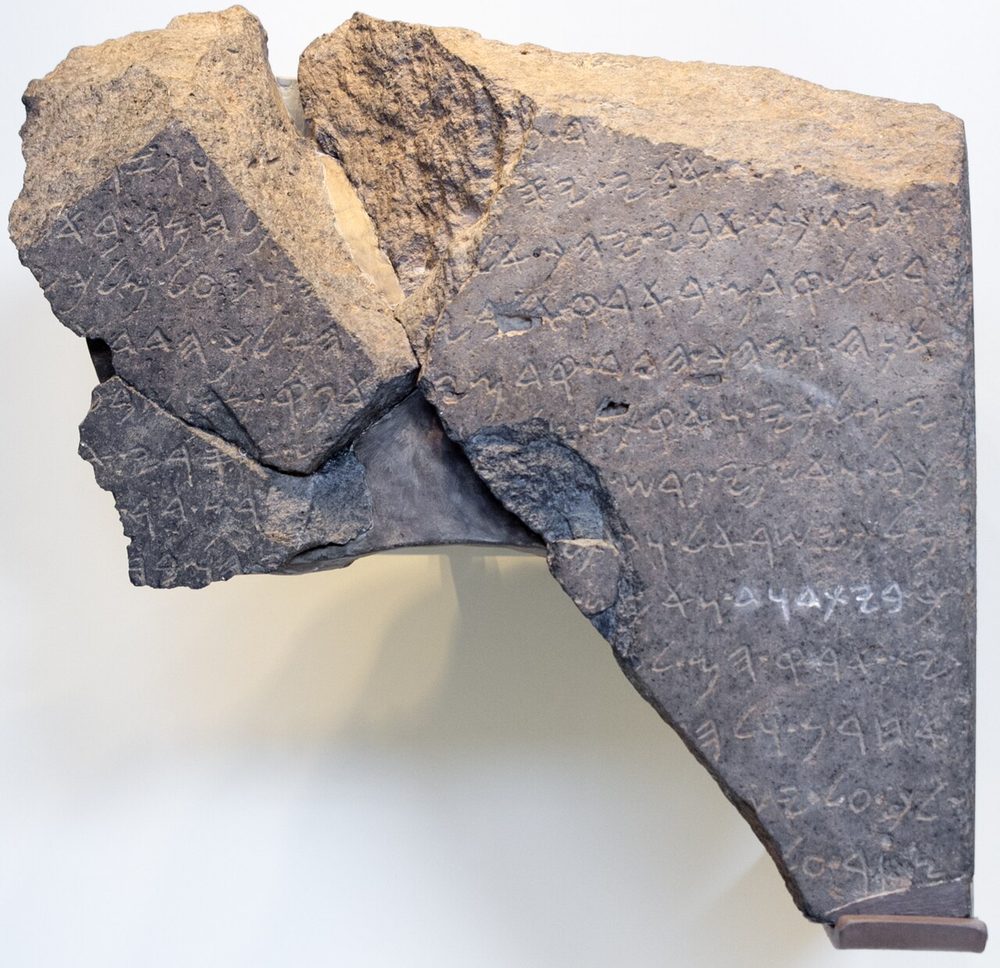
The broken Tel Dan stele with Aramaic writing
The Tel Dan stele, Israel Museum, Jerusalem. Photograph: Oren Rozen, Wikimedia Commons, CC BY-SA 4.0.

In the Bible

  • “David was thirty years old when he began to reign, and he reigned forty years.” (2 Samuel 5:4). Open the verse
  • His line ruled Judah from Jerusalem until the Babylonian exile. The Bible often calls it “the house of David.”

Outside the Bible

  • The Tel Dan stele. Broken pieces of a stone found in 1993 and 1994 at Tel Dan in northern Israel, reused in a later wall. It is written in Old Aramaic, most likely by Hazael king of Aram-Damascus, and is dated by most scholars to the second half of the 800s B.C. Source: Wikipedia, “Tel Dan stele”.
  • It boasts of victories over the king of Israel and the king of the “House of David” (in its letters, bytdwd). Most scholars read this as the earliest mention of David outside the Bible. A minority read the letters another way, because there is no word-divider between “house” and “David.” Source: Wikipedia, “Tel Dan stele”.
  • Where it is now: the Israel Museum, Jerusalem. Source: Wikipedia, “Tel Dan stele”.
OmriKing of Israel. Named by Moab and by Assyria.

Omri was a commander in the army of Israel who became king after a time of civil war. He reigned twelve years. His most lasting act was building a new capital: he bought a hill from a man named Shemer for two talents of silver and built the city of Samaria on it. Samaria remained the capital of Israel until the kingdom fell.

The Bible gives Omri only a few verses. Yet his neighbours remembered him as a strong king. The king of Moab wrote that Omri “oppressed Moab for many days.” An Assyrian monument made long after his death still calls King Jehu “son of Omri.”

In the Bible

  • “began Omri to reign over Israel, and reigned twelve years” (1 Kings 16:23). Open the verse
  • He built Samaria: “he bought the hill Samaria of Shemer for two talents of silver” (1 Kings 16:24). Open the verse

Outside the Bible

  • The Mesha Stele of the king of Moab (see Mesha, Part II) says: “Omri was the king of Israel, and he oppressed Moab for many days.” Source: World History Encyclopedia, “Moabite Stone [Mesha Stele]”.
  • Assyrian records go on calling Israel’s kings by Omri’s name. The Black Obelisk calls Jehu “son of Omri” (see Jehu). Source: Wikipedia, “Black Obelisk of Shalmaneser III”.
AhabKing of Israel. Named by Shalmaneser III of Assyria.

Ahab was Omri’s son. He reigned over Israel from Samaria for twenty-two years. He married Jezebel, the daughter of the king of the Sidonians, and served Baal. He is the king who stood against the prophet Elijah, and who took Naboth’s vineyard after Jezebel had Naboth killed. He built an ivory house and many cities, and he died in battle against Syria.

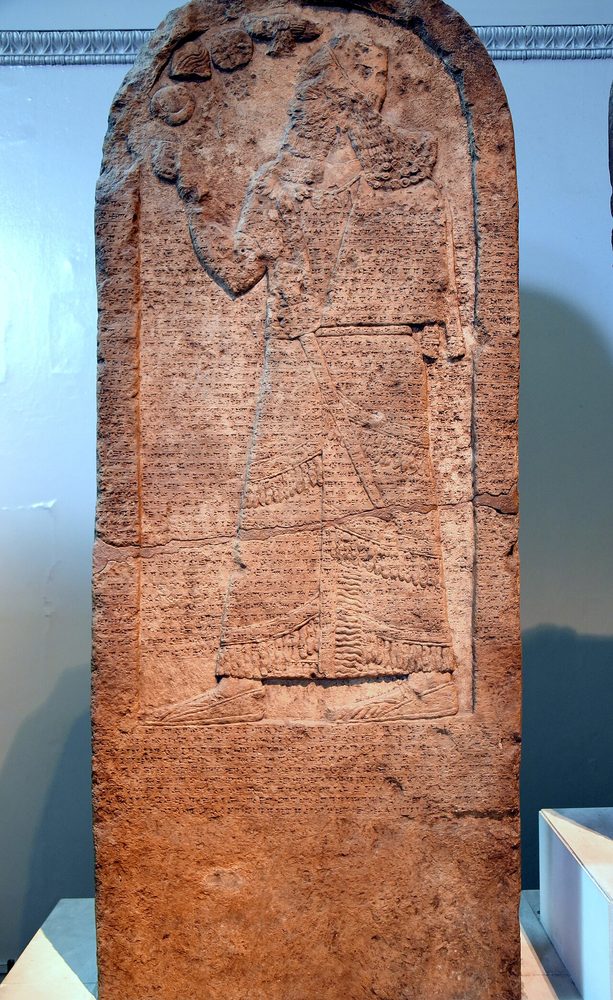
An Assyrian king, Shalmaneser III, set up a stone monument listing the kings who fought against him at the battle of Qarqar. Among them is “Ahab the Israelite,” with 2,000 chariots and 10,000 soldiers. The Bible does not tell of this battle. It is the first time Ahab’s name appears outside the Bible.

The tall Kurkh stele of Shalmaneser III
The Kurkh stele of Shalmaneser III, British Museum, London. Photograph: Osama Shukir Muhammed Amin, Wikimedia Commons, CC BY-SA 4.0.

In the Bible

  • “began Ahab the son of Omri to reign over Israel: and Ahab the son of Omri reigned over Israel in Samaria twenty and two years” (1 Kings 16:29). Open the verse
  • “the ivory house which he built, and all the cities that he built” (1 Kings 22:39). Open the verse

Outside the Bible

  • The Kurkh Monolith of Shalmaneser III, found in 1861 at Kurkh in south-east Turkey by the British consul John George Taylor, and dated about 852 B.C. Source: Wikipedia, “Kurkh Monoliths”.
  • It lists the kings who fought Assyria at the battle of Qarqar, among them “Ahab the Israelite” (A-ha-ab-bu Sir-ila-a-a) with 2,000 chariots and 10,000 soldiers. It is the first mention of Ahab outside the Bible. The battle of Qarqar is not told in the Bible. Source: Wikipedia, “Kurkh Monoliths”.
  • Some scholars think 2,000 chariots is a scribe’s error for 200. A few think this Ahab was a different king. Source: Wikipedia, “Kurkh Monoliths”.
  • Where it is now: the British Museum, London. Source: Wikipedia, “Kurkh Monoliths”.
JehuKing of Israel. Shown on the Black Obelisk.

Jehu was a commander in Israel’s army. The prophet Elisha sent a young prophet to anoint him king in secret. Jehu then drove his chariot “furiously” to Jezreel, killed King Joram, had Queen Jezebel thrown from a window, and wiped out the rest of Ahab’s family. He reigned twenty-eight years.

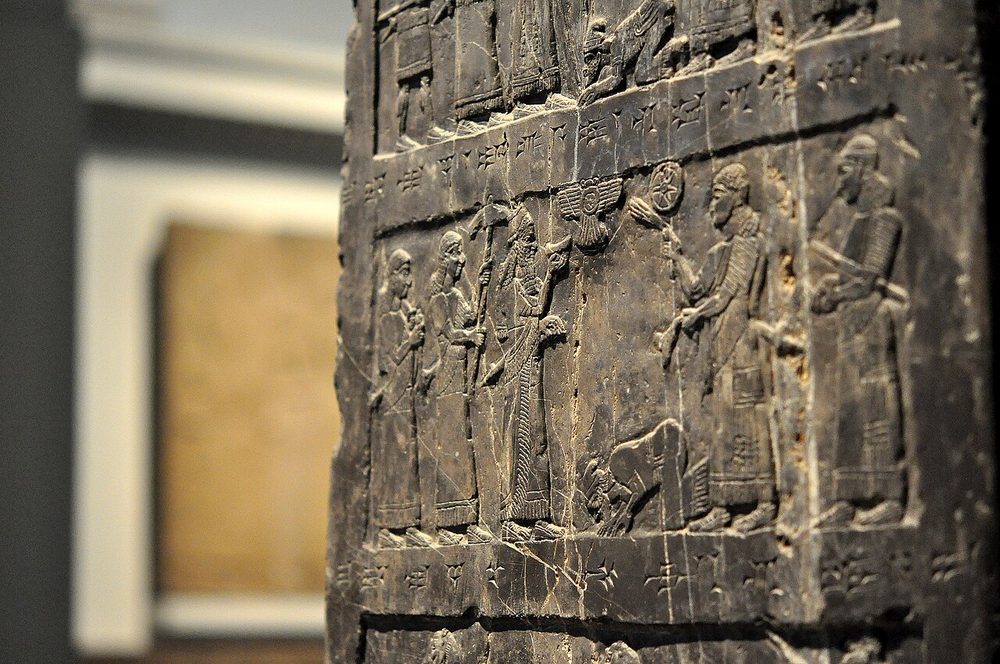
In the British Museum stands a black stone pillar from Assyria, carved with pictures. On one panel a man kneels with his face to the ground before the Assyrian king, Shalmaneser III. The words above him say this is the tribute of Jehu.

A carved panel of the Black Obelisk with a man bowing before the king
The Black Obelisk of Shalmaneser III, with the panel whose caption names the tribute of Jehu. British Museum, London. Photograph: Osama Shukir Muhammed Amin, Wikimedia Commons, CC BY-SA 4.0.

In the Bible

  • “Jehu the son of Jehoshaphat the son of Nimshi” (2 Kings 9:2). Open the verse
  • He ended Omri’s line: “So Jehu smote all that remained of the house of Ahab in Jezreel” (2 Kings 10:11). Open the verse
  • “And the time that Jehu reigned over Israel in Samaria was twenty and eight years.” (2 Kings 10:36). Open the verse

Outside the Bible

  • The Black Obelisk of Shalmaneser III, a carved stone pillar found at Nimrud (ancient Kalhu, in Iraq) in 1846 by Austen Henry Layard. It was made about 827 to 824 B.C.; the scene with Jehu is dated about 841 B.C. Source: Wikipedia, “Black Obelisk of Shalmaneser III”.
  • One panel shows a man bowing to the ground before the Assyrian king. Its caption: “I received the tribute of Iaua (Jehu) son of (the people of the land of) Omri,” and lists silver, gold, golden vessels, tin, a royal staff and spears. Source: Wikipedia, “Black Obelisk of Shalmaneser III”.
  • The Bible names Jehu’s father as Jehoshaphat son of Nimshi, and says Jehu destroyed Omri’s house. The obelisk calls him “son of Omri.” Most scholars take this as the Assyrian name for a king of Israel; some think the man shown is another king. Source: Wikipedia, “Black Obelisk of Shalmaneser III”.
  • Where it is now: the British Museum, London (ME 118885). Source: Wikipedia, “Black Obelisk of Shalmaneser III”.
HezekiahKing of Judah. Named by Sennacherib and on his own seal.

Hezekiah became king of Judah after his father Ahaz. The Bible says he trusted God more than any king of Judah before or after him. He removed the high places where idols were worshipped and broke the bronze serpent Moses had made, because people had begun burning incense to it.

In his fourteenth year, Sennacherib king of Assyria invaded Judah and captured its fortified cities. Hezekiah paid a huge tribute: three hundred talents of silver and thirty talents of gold. The Assyrian army still came to Jerusalem. Isaiah the prophet told Hezekiah not to be afraid. The Bible says the Assyrian army was struck down in one night, and Sennacherib went home.

In 2009, archaeologists digging near the south wall of the Temple Mount in Jerusalem found a tiny lump of clay, about half an inch across. Pressed into it is a seal that reads: “Belonging to Hezekiah son of Ahaz king of Judah.” It was used to seal a document from his court.

In the Bible

  • “in the fourteenth year of king Hezekiah did Sennacherib king of Assyria come up against all the fortified cities of Judah, and took them” (2 Kings 18:13). Open the verse
  • He paid: “three hundred talents of silver and thirty talents of gold” (2 Kings 18:14). Open the verse

His seal

  • A clay seal impression found in 2009 in the Ophel excavations below the south wall of the Temple Mount, Jerusalem, led by Eilat Mazar, and announced in December 2015. It reads in ancient Hebrew: “Belonging to Hezekiah [son of] Ahaz king of Judah,” with a winged sun. It is about 13 by 12 millimetres. Source: Hebrew University of Jerusalem, reported in ScienceDaily, 2 December 2015.
  • It was the first seal impression of a king of Israel or Judah found in a scientific excavation. Source: Hebrew University of Jerusalem, reported in ScienceDaily, 2 December 2015.

In Sennacherib’s own account

  • See Sennacherib, Part II.
JehoiachinKing of Judah. Named on ration lists in Babylon.

Jehoiachin became king of Judah at eighteen and ruled only three months. Nebuchadnezzar king of Babylon besieged Jerusalem, and Jehoiachin surrendered with his mother, his servants and his officials. He was taken to Babylon with thousands of captives, among them the prophet Ezekiel.

He stayed in a Babylonian prison for thirty-seven years. Then a new king of Babylon, Evil-merodach, let him out, gave him new clothes, a seat at the king’s table, and a daily allowance for the rest of his life. 2 Kings ends with this scene.

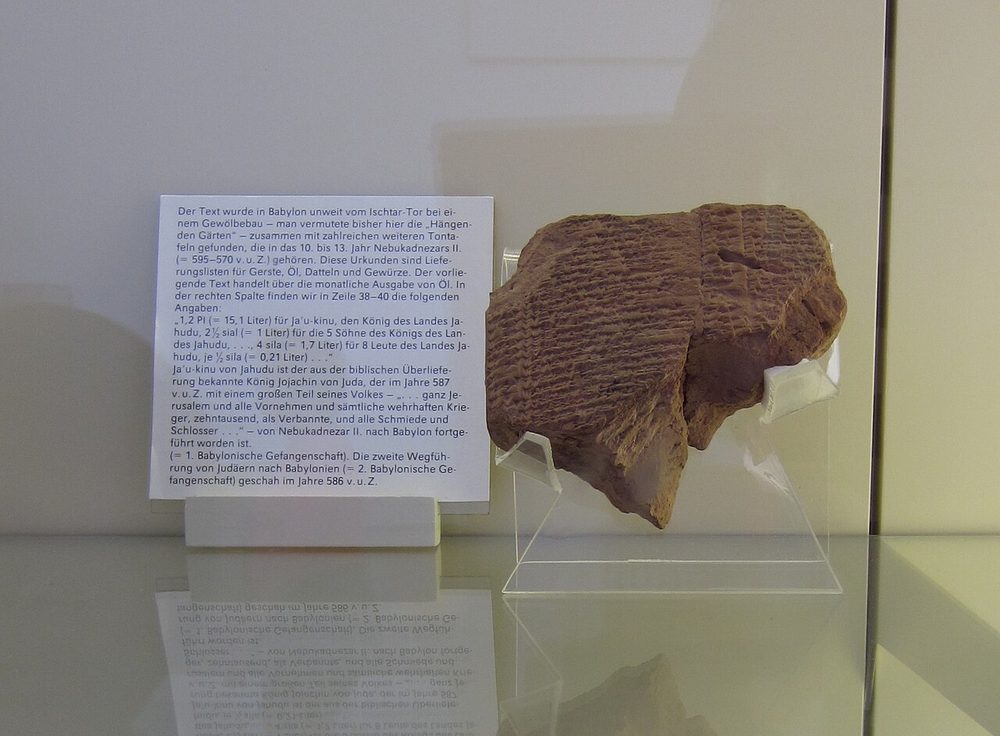
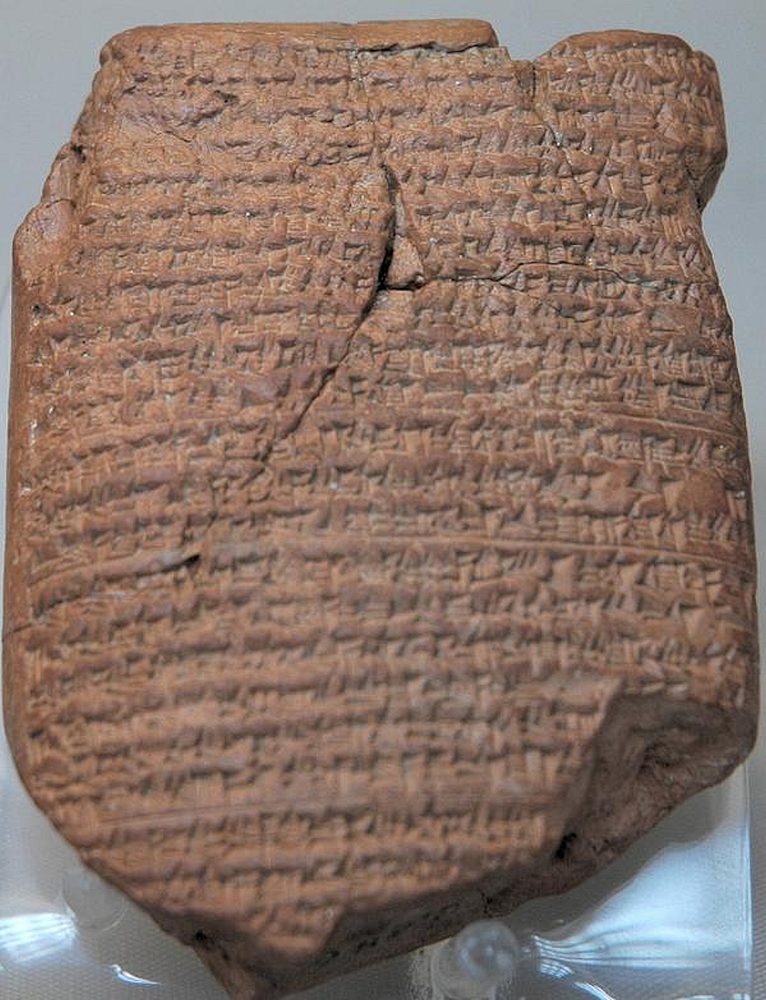
In the ruins of Babylon, archaeologists found clay tablets listing the oil given out to captives at the royal palace. One of the names on the lists is Jehoiachin, king of Judah, with his five sons. The Bible’s “continual allowance” is written on the Babylonians’ own records.

A broken clay tablet on display
One of the Babylonian ration tablets that name Jehoiachin. Photograph: Scallaham, Wikimedia Commons, CC BY-SA 4.0.

In the Bible

  • “he carried away Jehoiachin to Babylon” (2 Kings 24:15). Open the verse
  • Thirty-seven years later he was freed from prison and given a daily allowance: “changed his prison garments. And Jehoiachin did eat bread before him continually all the days of his life” (2 Kings 25:29). Open the verse “there was a continual allowance given him of the king, every day a portion” (2 Kings 25:30). Open the verse

Outside the Bible

  • The ration tablets. Clay tablets found near the Ishtar Gate in Babylon by Robert Koldewey’s excavation (1899 to 1917), dated about 595 to 570 B.C. Source: Wikipedia, “Jehoiachin’s Rations Tablets”.
  • They list oil given out to captives. One line reads: “10 sila to Ia-ku-u-ki-nu, the [king of Judah]’s son, 2½ sila for the five sons of the Judean king.” Parts of the text are broken and restored. Source: Wikipedia, “Jehoiachin’s Rations Tablets”.
  • Where they are now: the Pergamon Museum, Berlin (VAT 16378). Source: Wikipedia, “Jehoiachin’s Rations Tablets”.

Back to top

Part II

Kings of the nations around Israel

Egypt, Moab, Assyria, Babylon and Persia.

Israel and Judah were small kingdoms between great empires: Egypt to the south, and Assyria, Babylon and Persia to the east. The kings of those empires appear often in the Bible, usually as invaders.

These empires wrote a great deal. They carved their victories on temple walls and stone monuments, and kept records on clay tablets and cylinders that have survived for over two and a half thousand years. Sometimes their records name the same events the Bible tells. Sometimes they tell them differently. This part shows both.

Shishak (Shoshenq I)King of Egypt.

In the fifth year of Solomon’s son Rehoboam, Shishak king of Egypt marched against Jerusalem. He carried off the treasures of the temple and of the king’s palace, including the gold shields Solomon had made. Rehoboam replaced them with shields of bronze.

Most scholars identify Shishak with Shoshenq I, a king of Egypt. On the wall of the great temple of Karnak in Egypt, Shoshenq carved a list of the towns he conquered in the land of Israel. Megiddo is on it, and many other towns. Jerusalem is not. Scholars do not agree on why.

In the Bible

  • “in the fifth year of king Rehoboam, that Shishak king of Egypt came up against Jerusalem” (1 Kings 14:25). Open the verse “he took away all the shields of gold which Solomon had made” (1 Kings 14:26). Open the verse

Outside the Bible

  • Shishak is usually identified with the Egyptian king Shoshenq I. Some scholars question this. Source: Wikipedia, “Shoshenq I”.
  • His victory list, carved on the Bubastite Portal of the temple of Karnak in Egypt, names towns in the land of Israel, among them Megiddo, Taanach and Shechem. Jerusalem does not appear in it. Scholars give different reasons: the name may be worn away; the tribute may have spared the city; or the list may be partly copied from an older one. Source: Wikipedia, “Shoshenq I”.
MeshaKing of Moab. His own stone survives.

Moab was a small kingdom east of the Dead Sea. 2 Kings says that Mesha king of Moab raised sheep and paid the king of Israel a yearly tribute of the wool of a hundred thousand lambs and a hundred thousand rams. After Ahab died, Mesha rebelled. The kings of Israel, Judah and Edom marched against him.

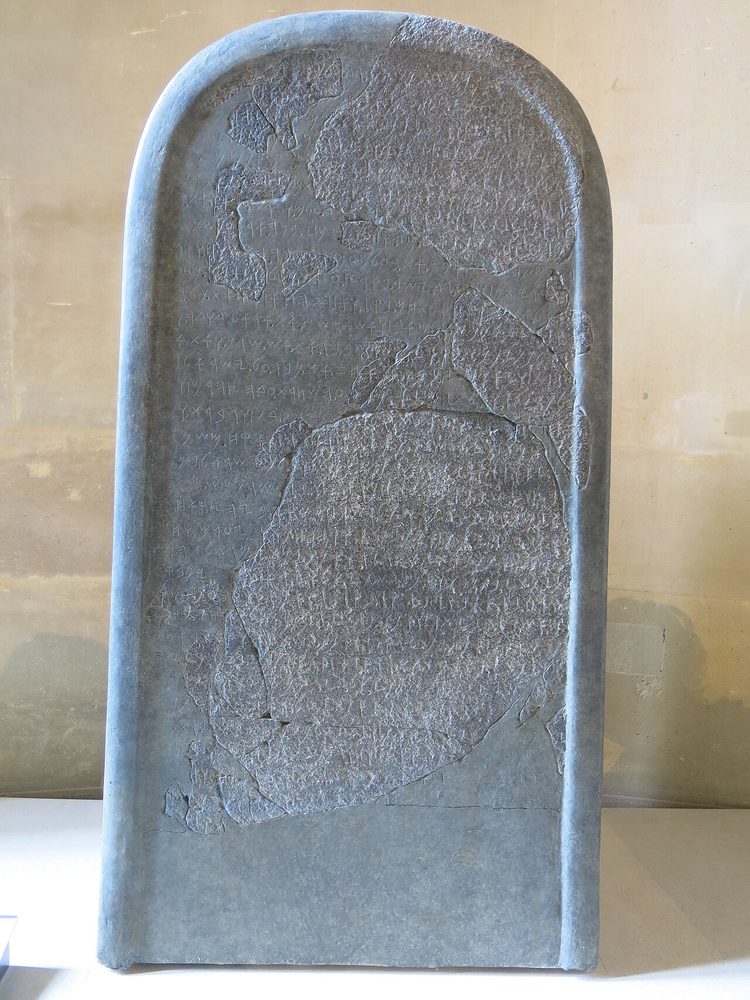
In 1868 a stone was found at Dhiban in Jordan, the Dibon of the Bible. Mesha himself had it carved. In it he tells the story from Moab’s side: Omri king of Israel had oppressed Moab for many days, but Mesha rose up, took back his land and towns, and took Nebo from Israel. He also writes that he took “the vessels of YHWH” and dragged them before his god Kemosh.

The Mesha Stele, a rounded black stone with writing
The Mesha Stele (the Moabite Stone), Louvre, Paris. Photograph: Tangopaso, Wikimedia Commons, public domain.

In the Bible

  • “Mesha king of Moab was a sheep-master” (2 Kings 3:4). Open the verse “when Ahab was dead, that the king of Moab rebelled against the king of Israel” (2 Kings 3:5). Open the verse

Outside the Bible

  • The Mesha Stele (the Moabite Stone). Found in 1868 at Dhiban (Dibon) in Jordan. Local people broke it before it was taken away; it has 33 legible lines and is about 1.15 metres high. It is dated to the late 800s B.C. Source: World History Encyclopedia, “Moabite Stone [Mesha Stele]”.
  • Mesha tells it from Moab’s side: “Omri was the king of Israel, and he oppressed Moab for many days.” He says his god Kemosh told him: “Go, take Nebo from Israel!” and then: “I took the vessels of YHWH, and I hauled them before the face of Kemoš.” Source: World History Encyclopedia, “Moabite Stone [Mesha Stele]”.
  • Where it is now: the Louvre, Paris. Source: World History Encyclopedia, “Moabite Stone [Mesha Stele]”.
SennacheribKing of Assyria. His own account of the siege.

Sennacherib was king of Assyria, the strongest empire of his day. In 701 B.C. he invaded Judah. The Bible says he captured all the fortified cities of Judah and then sent his officers to Jerusalem to demand surrender. They mocked Hezekiah and the God of Israel in front of the city wall.

Hezekiah prayed, and Isaiah answered that the king of Assyria would not enter the city. The Bible says that in one night the angel of YHWH struck down 185,000 men in the Assyrian camp, and Sennacherib went home to Nineveh. Years later, as he worshipped in the temple of his god, two of his sons killed him with the sword.

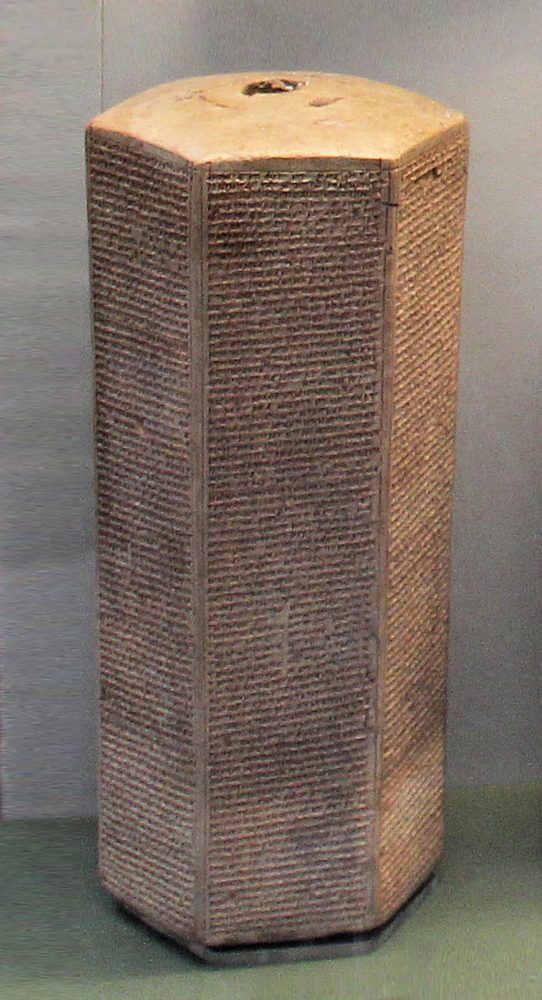
Sennacherib wrote his own account on clay prisms. He says he captured forty-six of Hezekiah’s walled cities, took 200,150 people captive, and shut Hezekiah up in Jerusalem “like a caged bird.” He lists the tribute Hezekiah sent. He does not say he took Jerusalem.

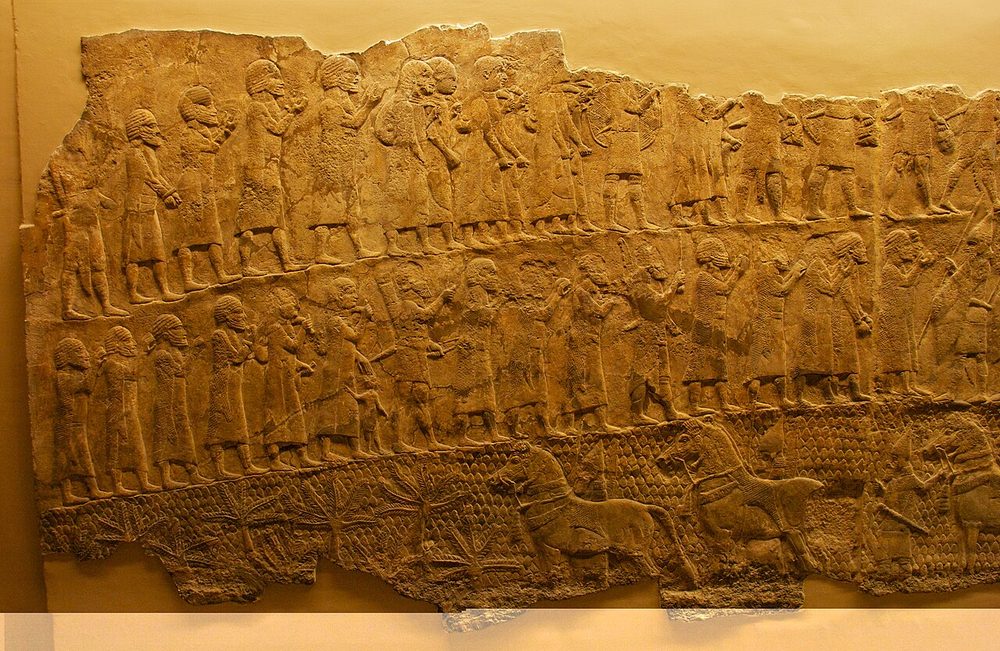
On the walls of his palace at Nineveh he had the siege of Lachish, a city of Judah, carved in stone: the attack on the walls, the captives led away, and Sennacherib on his throne. Those carvings are now in the British Museum.

A six-sided clay prism covered in cuneiform writing
The Taylor Prism, Sennacherib’s annals, British Museum, London. Photograph: Gary Todd, Wikimedia Commons, CC0.
Stone relief of soldiers and captives at Lachish
Part of the Lachish reliefs from Sennacherib’s palace at Nineveh, British Museum, London. Photograph: Mike Peel (www.mikepeel.net), Wikimedia Commons, CC BY-SA 4.0.

In the Bible

  • “Sennacherib king of Assyria come up against all the fortified cities of Judah, and took them” (2 Kings 18:13). Open the verse
  • “the angel of Jehovah went forth, and smote in the camp of the Assyrians a hundred fourscore and five thousand” (2 Kings 19:35). Open the verse
  • “So Sennacherib king of Assyria departed, and went and returned, and dwelt at Nineveh.” (2 Kings 19:36). Open the verse
  • “Adrammelech and Sharezer his sons smote him with the sword” (Isaiah 37:38). Open the verse

His prisms

  • Sennacherib’s annals survive on clay prisms: the Taylor Prism (British Museum, dated 691 B.C.), the Chicago prism (dated 689 B.C.) and the Jerusalem Prism (Israel Museum). Source: Wikipedia, “Sennacherib’s Annals”.
  • About Hezekiah they say: “I besieged and captured forty-six of his fortified cities,” “I took as plunder 200,150 people, both small and great,” and “I shut him up like a caged bird in his royal city of Jerusalem.” They list the tribute Hezekiah sent. Source: Wikipedia, “Sennacherib’s Annals”.
  • The prisms do not claim that Jerusalem was taken. The Bible says the Assyrian army was struck and Sennacherib went home. Both are shown here; this page takes no side.

The Lachish reliefs

  • Carved stone panels from Sennacherib’s palace at Nineveh, found by Austen Henry Layard in 1845 to 1847. They show the siege of Lachish in Judah in 701 B.C.: the assault, the spoil carried out, and the people led away. Sennacherib sits on his throne before the city. Source: Wikipedia, “Lachish reliefs”.
  • The Bible places him there: “Hezekiah king of Judah sent to the king of Assyria to Lachish” (2 Kings 18:14). Open the verse
  • Where they are now: the British Museum, London, Room 10b. Source: Wikipedia, “Lachish reliefs”.
NebuchadnezzarKing of Babylon. His chronicle records the fall of Jerusalem in 597 B.C.

Nebuchadnezzar was the greatest king of Babylon. He attacked Jerusalem more than once. In 597 B.C. he captured the city, took King Jehoiachin, the royal family, the officials, the craftsmen and the temple treasures to Babylon, and put Jehoiachin’s uncle Mattaniah on the throne, renaming him Zedekiah.

When Zedekiah rebelled, Nebuchadnezzar came back. About ten years later his army burned the temple and broke down the walls of Jerusalem, and most of the people were carried away to Babylon. Nebuchadnezzar is also the king of the first chapters of Daniel: the dream of the great statue, the fiery furnace, and the “seven times” he lived like an animal in the field.

A Babylonian clay tablet called the Babylonian Chronicle records the first of these attacks. It says that in his seventh year the king of Babylon besieged the city of Judah, captured it on a set day, seized its king, and appointed a king of his own choice: the same events as 2 Kings 24.

A clay tablet with cuneiform writing
The Babylonian Chronicle of Nebuchadnezzar’s early years (BM 21946), British Museum, London. Photograph: Jona Lendering (Livius.org), Wikimedia Commons, CC0.

In the Bible

  • “the servants of Nebuchadnezzar king of Babylon came up to Jerusalem, and the city was besieged” (2 Kings 24:10). Open the verse
  • “the king of Babylon took him in the eighth year of his reign” (2 Kings 24:12). Open the verse
  • “the king of Babylon made Mattaniah, Jehoiachin’s father’s brother, king in his stead, and changed his name to Zedekiah” (2 Kings 24:17). Open the verse

Outside the Bible

  • The Babylonian Chronicle (the Nebuchadnezzar Chronicle, BM 21946). For the seventh year of Nebuchadnezzar it records that his army besieged “the city of Judah,” took it on the second day of the month Adar (16 March 597 B.C.), seized its king, and set up a king of his own choosing. Source: Wikipedia, “Nebuchadnezzar Chronicle”.
  • Where it is now: the British Museum, London. Source: Wikipedia, “Nebuchadnezzar Chronicle”.
  • Josephus tells his reign in Antiquities of the Jews, Book 10, chapter 11.
BelshazzarNamed by his father Nabonidus.

Daniel 5 tells of Belshazzar, king of Babylon, who held a great feast for a thousand of his lords. He ordered the gold and silver cups taken from the temple in Jerusalem to be brought, and they drank wine from them and praised their gods. A hand appeared and wrote on the wall. None of his wise men could read it. Daniel read it: God had numbered his kingdom and ended it. That night Belshazzar was killed, and the Medes and Persians took the kingdom.

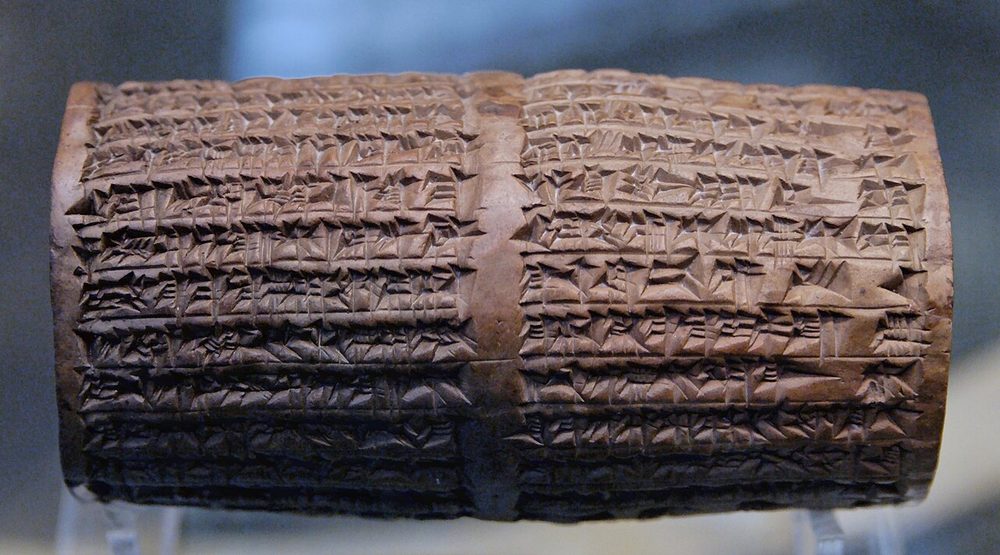
For a long time no other ancient writing was known that named Belshazzar. Then clay cylinders of Nabonidus, the last king of Babylon, were found at Ur. In a prayer on them, Nabonidus names “Belshazzar, the eldest son.”

Daniel 5 calls Nebuchadnezzar his father; the cylinders name Nabonidus as his father. Both are shown on this card.

A clay cylinder covered in cuneiform writing
A cylinder of Nabonidus from Ur, with his prayer for his son Belshazzar, British Museum, London. Photograph: Jastrow, Wikimedia Commons, CC BY 2.5.

In the Bible

  • “Belshazzar the king made a great feast to a thousand of his lords” (Daniel 5:1). Open the verse
  • He offers the man who reads the writing on the wall “the third ruler in the kingdom” (Daniel 5:7). Open the verse
  • “In that night Belshazzar the Chaldean king was slain.” (Daniel 5:30). Open the verse

Outside the Bible

  • The cylinders of Nabonidus, the last king of Babylon. Clay cylinders found in 1854 in a temple tower at Ur by J. G. Taylor. In them Nabonidus prays for “Belshazzar, the eldest son, my offspring.” Source: Wikipedia, “Cylinders of Nabonidus”.
  • Daniel 5 calls Nebuchadnezzar Belshazzar’s father: “Nebuchadnezzar his father” (Daniel 5:2). Open the verse The cylinders name Nabonidus as his father. Both are shown here; this page takes no side.
CyrusKing of Persia. His cylinder survives.

Cyrus was the king of Persia who conquered Babylon. In the first year of his rule, he made a proclamation that the Jews could go home to Jerusalem and rebuild the house of God. He gave back the gold and silver vessels Nebuchadnezzar had taken from the temple. Ezra and 2 Chronicles both record his decree.

Isaiah names Cyrus, calling him God’s anointed, the one who would say of Jerusalem, “She shall be built.”

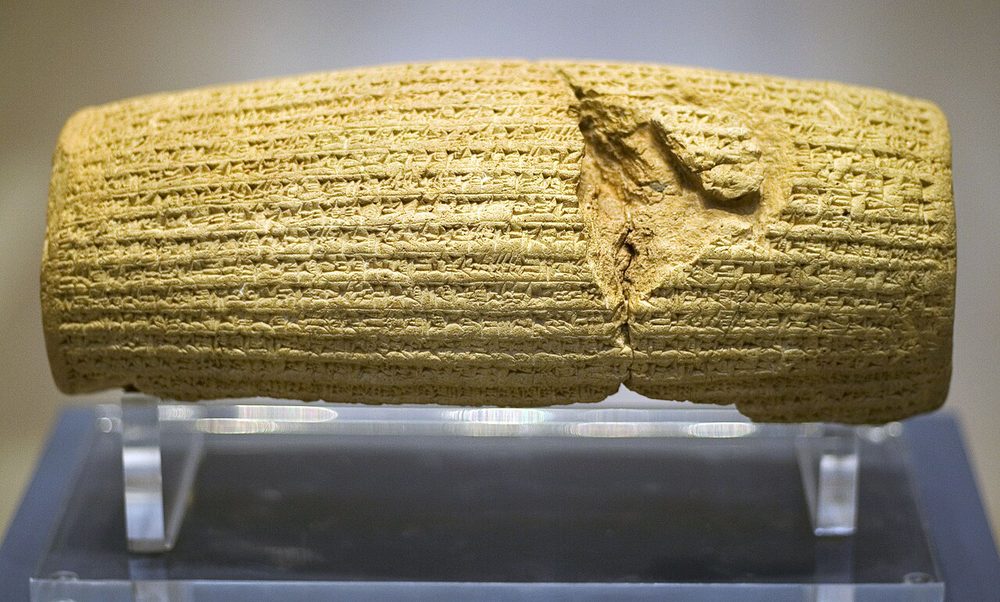
A clay cylinder from Babylon, now in the British Museum, holds Cyrus’s own words. He writes that he returned the gods of many cities to their homes and let them stay there. The cylinder does not name the Jews.

The Cyrus Cylinder, a barrel-shaped clay cylinder
The Cyrus Cylinder, British Museum, London. Photograph: Prioryman, Wikimedia Commons, CC BY-SA 3.0.

In the Bible

  • “Thus saith Cyrus king of Persia” (Ezra 1:2). Open the verse “he hath charged me to build him a house in Jerusalem, which is in Judah” (Ezra 1:2). Open the verse
  • Isaiah names him: “to Cyrus, whose right hand I have holden” (Isaiah 45:1). Open the verse

Outside the Bible

  • The Cyrus Cylinder. A clay cylinder found in Babylon in 1879 by Hormuzd Rassam. In it Cyrus says that the gods of the cities “I brought back to their places, and caused them to dwell in a residence for all time.” Source: Center for Online Judaic Studies, “Cyrus Cylinder, c. 535 BCE”.
  • The cylinder does not name the Jews or Judah. Source: Center for Online Judaic Studies, “Cyrus Cylinder, c. 535 BCE”.
  • Where it is now: the British Museum, London (BM 90920). Source: Center for Online Judaic Studies, “Cyrus Cylinder, c. 535 BCE”.
  • Josephus tells the return under Cyrus in Antiquities of the Jews, Book 11, chapter 1.

Back to top

Part III

The Roman period

Rulers and leaders in the time of Yeshua and the apostles.

By the time of Yeshua, the land of Israel was ruled by Rome. Rome governed through local kings like Herod and his sons, and through Roman officials called prefects, procurators and proconsuls. The high priest in Jerusalem led the temple and the Jewish council, called the Sanhedrin.

Many of these people are named by two writers of that age who are on the Ancient Reference Books shelf in Open Scroll: Josephus, a Jewish historian, and Tacitus, a Roman historian. Some are also named on stone and in tombs.

Herod the GreatKing of Judea under Rome.

Herod, called Herod the Great, was king of Judea under Rome. He rebuilt the temple in Jerusalem on a grand scale and built cities, palaces and fortresses. He was also known for his cruelty, even to his own family.

Yeshua was born in Bethlehem in the days of King Herod. When wise men from the east came looking for a newborn king, Herod tried to find the child, and ordered the killing of the boys of Bethlehem two years old and under. Joseph took Mary and the child to Egypt until Herod died.

Josephus tells Herod’s whole life, from his rise to power to his death and burial, across four books of his Antiquities.

In the Bible

  • “Now when Jesus was born in Bethlehem of Judaea in the days of Herod the king” (Matthew 2:1). Open the verse
  • “But when Herod was dead” (Matthew 2:19). Open the verse

Outside the Bible

Tiberius CaesarRoman emperor. Luke dates John’s preaching by his reign.

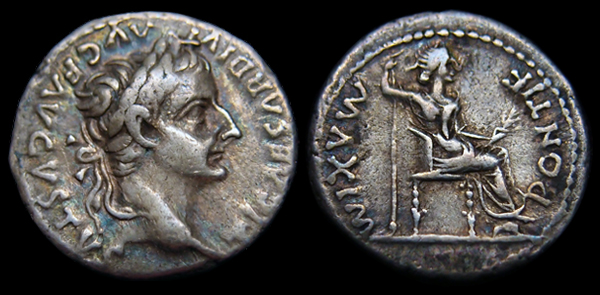
Tiberius was the Roman emperor during the adult life of Yeshua. Luke dates the start of John the Baptist’s preaching by him: “the fifteenth year of the reign of Tiberius Caesar.”

The Roman historian Tacitus wrote the history of Tiberius’s reign in the first six books of his Annals, which you can read in Open Scroll.

A silver denarius of Tiberius, front and back
A silver denarius of Tiberius. Photograph: DrusMAX, Wikimedia Commons, CC BY-SA 3.0.

In the Bible

  • “Now in the fifteenth year of the reign of Tiberius Caesar, Pontius Pilate being governor of Judaea, and Herod being tetrarch of Galilee” (Luke 3:1). Open the verse

Outside the Bible

  • The Roman historian Tacitus tells the reign of Tiberius in the first six books of his Annals. See Tacitus, Annals and Histories, on the Ancient Reference Books shelf. Open Tacitus
Pontius PilateRoman governor of Judea. Named on a stone at Caesarea.

Pontius Pilate was the Roman governor of Judea. When the chief priests brought Yeshua to him bound, Pilate questioned him and said he found no fault in him. Pilate offered to release a prisoner for the Passover, and the crowd asked for Barabbas. Pilate washed his hands before the crowd, released Barabbas, and handed Yeshua over to be crucified. He had a sign written for the cross: “Jesus of Nazareth, the King of the Jews.”

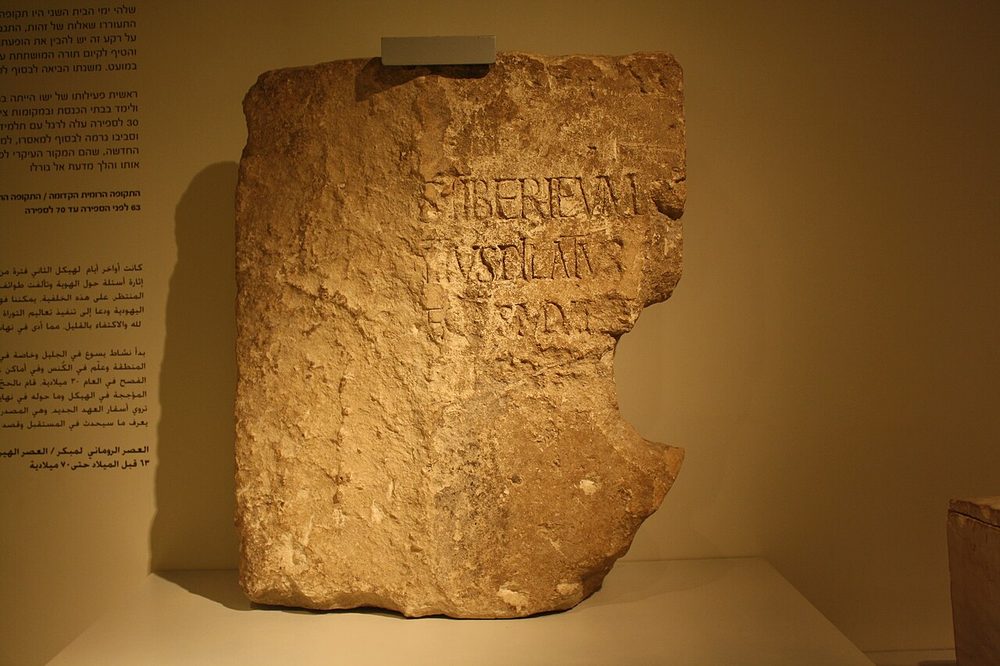
In 1961, Italian archaeologists working in the ancient theatre at Caesarea, the Roman capital of Judea, found a stone block reused as a step. Carved on it in Latin, partly broken away, is a dedication naming Pontius Pilate as Prefect of Judea. It is the earliest record from his own time that names him.

Josephus also writes about Pilate, and the Roman historian Tacitus names him as the governor under whom “Christus” was put to death.

A limestone block with a Latin inscription naming Pontius Pilate
The Pilate Stone. Photograph: BRBurton, Wikimedia Commons, CC0.

In the Bible

  • “they bound him, and led him away, and delivered him up to Pilate the governor” (Matthew 27:2). Open the verse
  • Luke 3:1 dates his time as governor to the reign of Tiberius.

The Pilate Stone

  • A limestone block, 82 by 65 centimetres, found in June 1961 in the theatre at Caesarea Maritima, where it had been reused as a step. Its Latin inscription names [Pontius] Pilate, [Prefect] of Judea, and a building he dedicated to the emperor Tiberius. It is the earliest record from his own time that names him. Source: Wikipedia, “Pilate stone”.
  • Where it is now: the Israel Museum, Jerusalem. Copies stand at Caesarea and in Milan. Source: Wikipedia, “Pilate stone”.

In other ancient writers

  • Josephus: “Pontius Pilate came as his successor” (as governor of Judea), and he tells how Pilate brought the emperor’s images into Jerusalem. Antiquities of the Jews, Book 18, chapter 3
  • Tacitus says the Christians took their name from “Christus,” who “suffered the extreme penalty during the reign of Tiberius at the hands of one of our procurators, Pontius Pilatus.” Tacitus, Annals, Book 15, chapter 44
CaiaphasHigh priest. A bone box with his family name.

Caiaphas was the high priest in Jerusalem at the time of Yeshua’s trial. The chief priests and elders met in his court to plan Yeshua’s arrest. When Yeshua was arrested, he was taken first to Annas, Caiaphas’s father-in-law, and then to Caiaphas, who questioned him before the council. John records that Caiaphas had earlier said it was better for one man to die for the people than for the whole nation to perish.

Josephus names him “Joseph Caiaphas” and says he was made high priest by a Roman governor and removed years later by another.

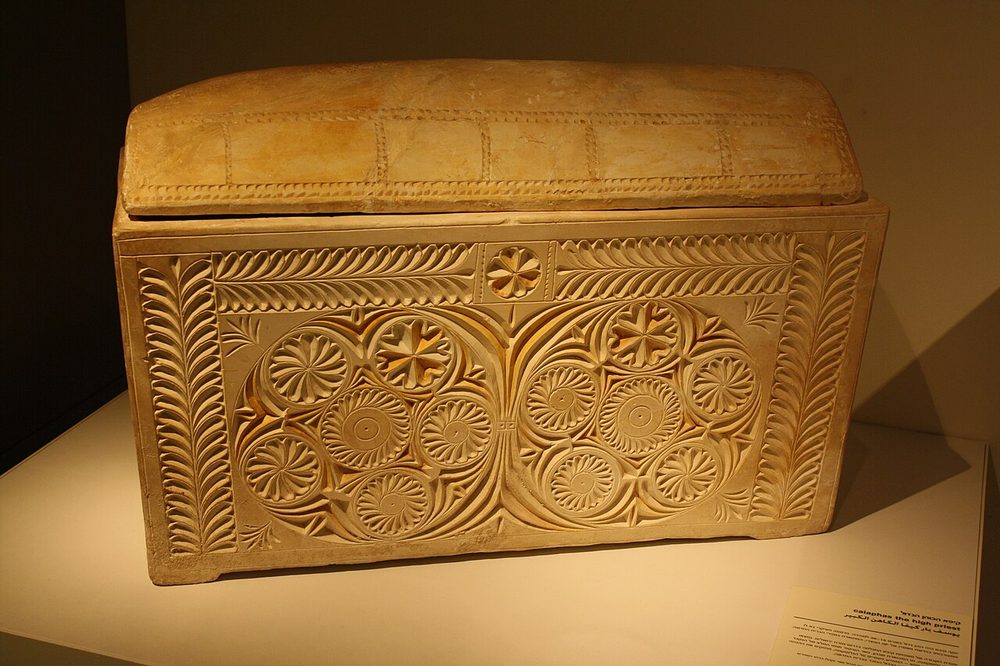
In 1990, workers building a park in Jerusalem broke into an ancient family tomb. Inside was a richly carved stone bone box with the name “Joseph son of Caiaphas” on it. Many scholars think it belonged to the high priest’s family; some doubt it.

A carved stone bone box decorated with rosettes
The Caiaphas ossuary. Photograph: BRBurton, Wikimedia Commons, CC0.

In the Bible

  • “the court of the high priest, who was called Caiaphas” (Matthew 26:3). Open the verse
  • “he was father in law to Caiaphas, who was high priest that year” (John 18:13). Open the verse

In Josephus

The Caiaphas ossuary

  • A carved stone bone box found in 1990 in a family tomb in the Peace Forest, North Talpiot, Jerusalem. It is inscribed “Yehosef bar Qayafa” on one side and “Yehosef bar Qafa” on another: “Joseph, son of Caiaphas.” Source: Wikipedia, “Caiaphas ossuary”.
  • Some scholars doubt that it is the high priest’s, because of the spelling and because the box does not name him as high priest. Source: Wikipedia, “Caiaphas ossuary”.
  • Where it is now: the Israel Museum, Jerusalem. Source: Wikipedia, “Caiaphas ossuary”.
John the BaptistNamed by Josephus.

John the Baptist preached in the wilderness by the Jordan River and baptized people who confessed their sins. He baptized Yeshua. He told Herod Antipas, the ruler of Galilee, that it was not lawful for him to marry his brother’s wife, Herodias. Herod put him in prison. At Herod’s birthday feast, Herodias’s daughter danced, and Herod promised her anything. At her mother’s urging she asked for John’s head, and Herod had John beheaded in the prison.

Josephus also writes about John. He calls him “a good man” who taught the Jews to live rightly and to come to baptism, and says Herod put him to death.

In the Bible

  • “Herod had laid hold on John, and bound him, and put him in prison for the sake of Herodias, his brother Philip’s wife” (Matthew 14:3). Open the verse
  • “and he sent and beheaded John in the prison.” (Matthew 14:10). Open the verse

In Josephus

  • Josephus writes that some Jews thought Herod’s army was destroyed “as a punishment of what he did against John, that was called the Baptist: for Herod slew him, who was a good man, and commanded the Jews to exercise virtue.” Antiquities of the Jews, Book 18, chapter 5
JamesNamed by Josephus.

James, called “the Lord’s brother,” became a leader of the church in Jerusalem. Paul met him there. At the council in Acts 15, when the apostles debated whether Gentile believers had to keep the whole Law (Torah), it was James who spoke last and proposed the decision. The letter of James is written in his name.

Josephus tells how James died. Between two Roman governors, the high priest Ananus called the council and brought before it “the brother of Jesus, who was called Christ, whose name was James,” and had him stoned.

In the Bible

  • “James the Lord’s brother” (Galatians 1:19). Open the verse
  • He speaks for the church in Jerusalem: “James answered, saying, Brethren, hearken unto me” (Acts 15:13). Open the verse

In Josephus

  • Josephus writes that the high priest Ananus “brought before them the brother of Jesus, who was called Christ, whose name was James, and some others,” and had them stoned. Antiquities of the Jews, Book 20, chapter 9
GallioRoman proconsul. Named in a letter of the emperor Claudius.

Gallio was the Roman proconsul, or governor, of Achaia, the southern part of Greece, while Paul was living in Corinth. Some of the Jews of Corinth brought Paul before Gallio’s judgment seat. Gallio refused to hear the case. He said it was a matter of words and names and their own law, not a crime, and drove them away.

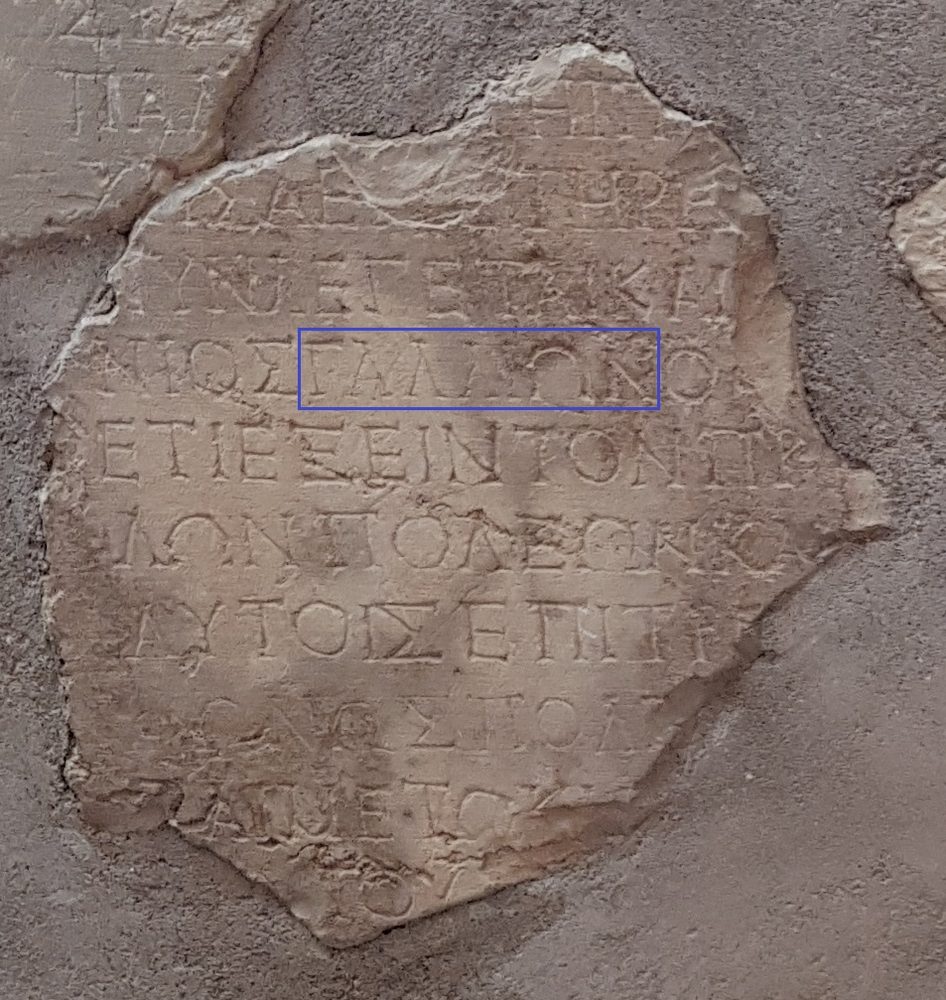
A stone found at Delphi in Greece copies a letter from the emperor Claudius that names Gallio as proconsul. The letter can be dated to A.D. 52. Since a proconsul served for one year, this places Paul in Corinth around A.D. 51 to 52. It helps date Paul’s time in Corinth.

Gallio was the elder brother of Seneca, the Roman writer.

A stone fragment with Greek writing
A fragment of the Gallio inscription, Delphi Archaeological Museum, Greece. Photograph: Gérard, Wikimedia Commons, CC BY-SA 4.0.

In the Bible

  • “when Gallio was proconsul of Achaia, the Jews with one accord rose up against Paul and brought him before the judgment-seat” (Acts 18:12). Open the verse
  • “if they are questions about words and names and your own law, look to it yourselves; I am not minded to be a judge of these matters” (Acts 18:15). Open the verse

Outside the Bible

  • Gallio was the elder brother of the Roman writer Seneca. He was born Lucius Annaeus Novatus and took the name Gallio when he was adopted. Source: Wikipedia, “Lucius Junius Gallio Annaeanus”.
  • The Delphi inscription. Pieces of a stone found at Delphi in Greece from 1905 onward. It copies a letter of the emperor Claudius that names “my friend and proconsul L. Iunius Gallio.” It is dated by Claudius’s 26th acclamation as emperor, January to August A.D. 52. Source: Bible Archaeology Report, “Gallio: An Archaeological Biography” (2019).
  • Because proconsuls served one year, it places Gallio in Achaia in about A.D. 51 to 52. This gives a date for Paul’s stay in Corinth in Acts 18. Source: Bible Archaeology Report, “Gallio: An Archaeological Biography” (2019).

Back to top

Part IV

How to read these cards

Before there were rulers, scales from a store, or coins with a set value, people in Bible times still had to measure things. They had to measure land, build houses, sell grain and pay wages. They did it with what they had: their own hands and arms, stones of a set weight, and clay jars of a set size.

This first part explains how that worked. It shows why the Bible counts length in fingers and forearms, why money was weighed on a scale, and why the Law (Torah) and the Prophets speak so strongly about honest weights. It also explains why the modern numbers on this page are given as a range, from smallest to largest, and not as one exact figure.

Back to top

↑Top