Part I
The find
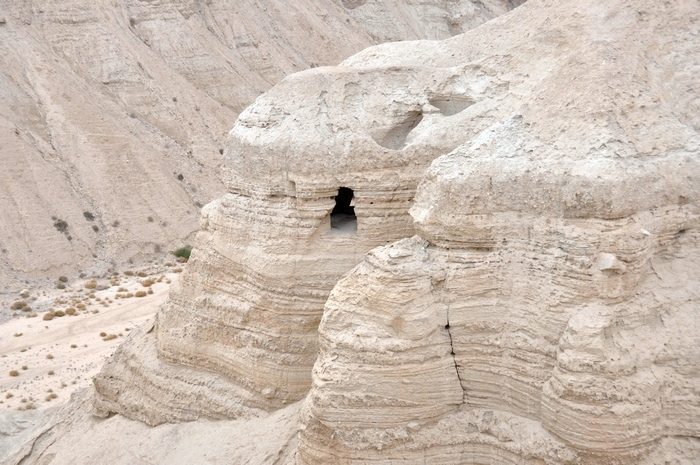
- A lost goat. In 1947 a young Bedouin shepherd of the Ta’amireh tribe went looking for a stray goat in the Judean Desert, near Qumran. As the story is told, he found a cave in a steep, rocky hillside and threw a stone into the dark. He heard pots break.
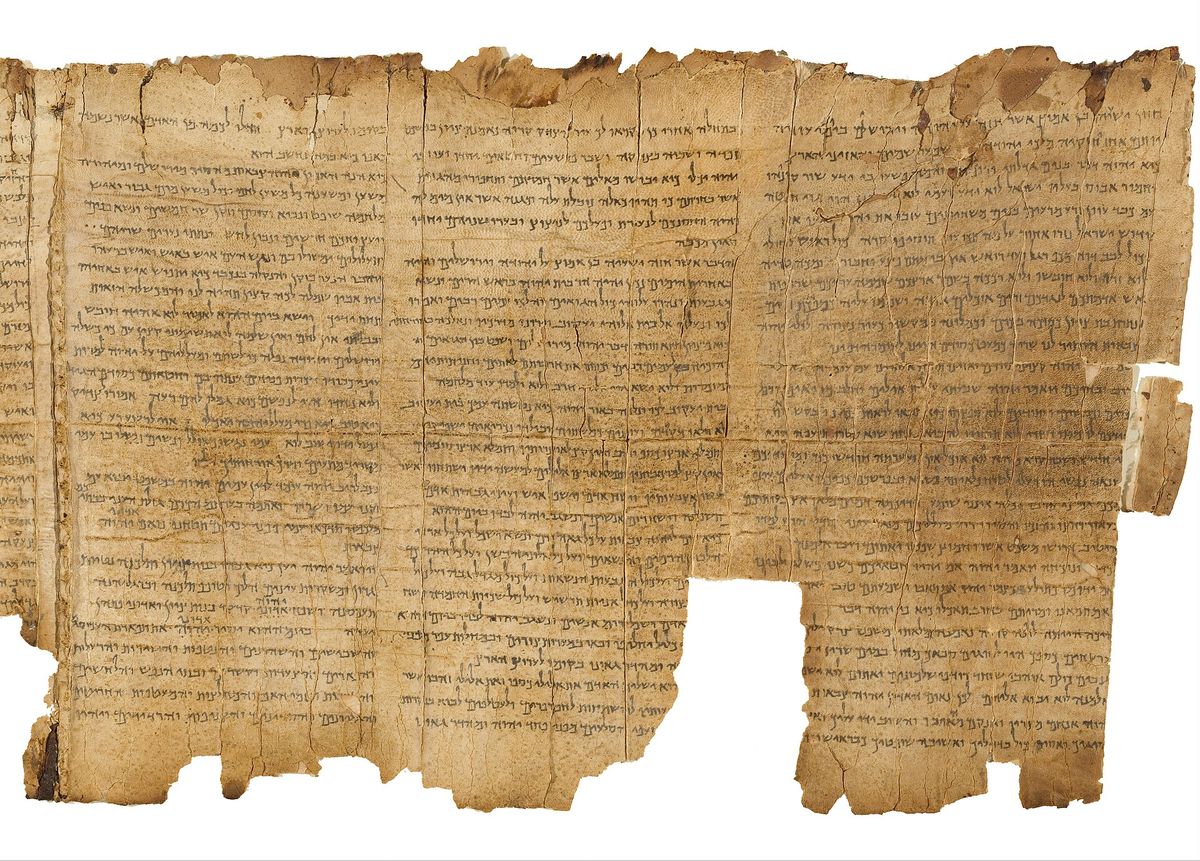
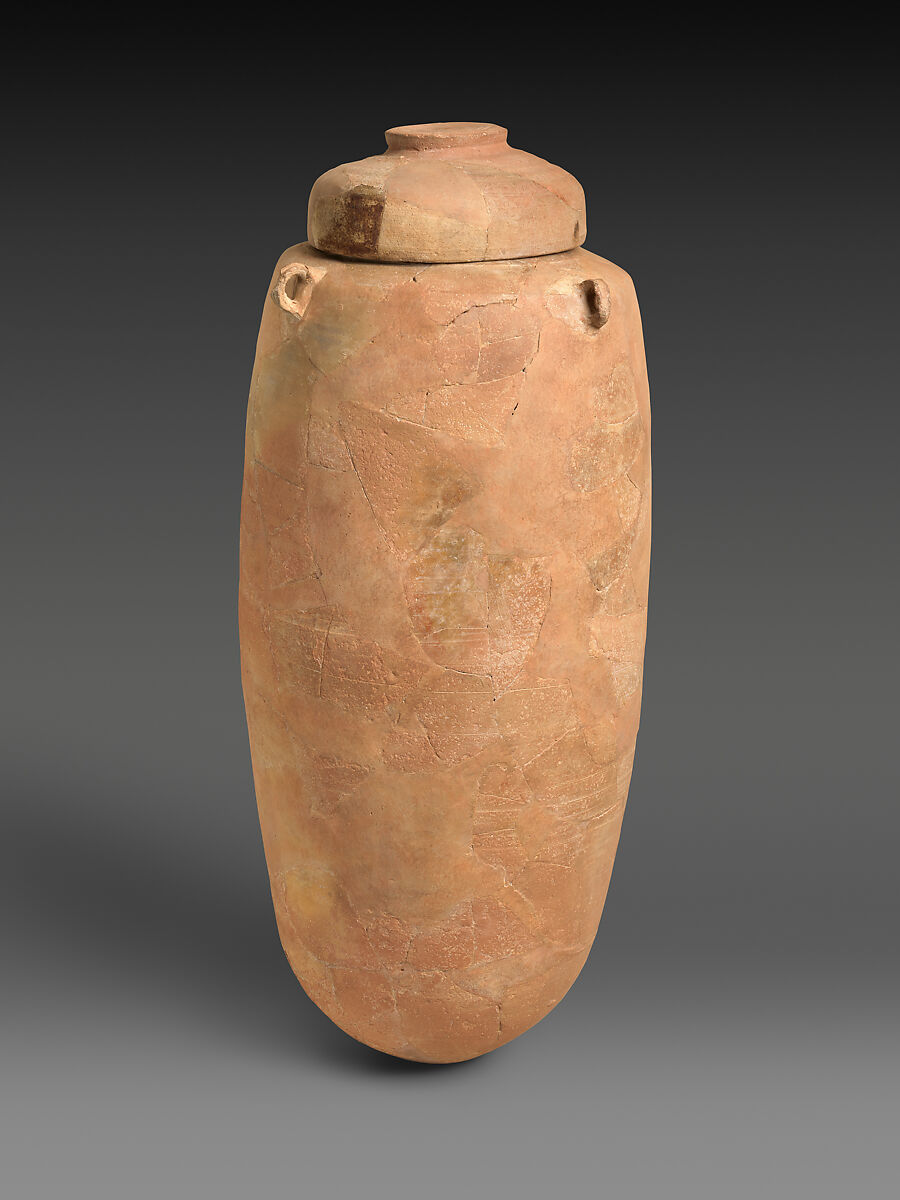
- Jars in the dark. Inside stood a group of large clay jars. Most were empty. In the few that were not, with their lids still in place, were old scrolls, some wrapped in linen and blackened with age.
- The jars. They are tall, round pottery jars with lids, a kind found nowhere else, and they were probably made near Qumran. One is about 50 centimeters (19½ inches) tall. The same jars were found in the caves and in the old buildings at Qumran.
- The linen. Seventy-seven pieces of linen cloth were listed from Cave 1. Some were wrappers: one scroll was found still wrapped in a small square of linen. Some were folded into pads, perhaps to pack worn scrolls inside the jars. Others, with corners twisted or tied with cord, may have been covers tied over the tops of the jars.
- Seven scrolls, two dealers. The shepherds took the scrolls to Kando, an antiquities dealer in Bethlehem, who sent them back to the cave for more. In all there were seven scrolls. Four went to Kando and three to a second dealer, Salahi.
- A professor’s first look. Professor E. L. Sukenik of the Hebrew University bought Salahi’s three. He later wrote in his diary:
“My hands shook as I started to unwrap one of them.”
- For sale in a newspaper. Kando sold his four to Mar Athanasius Yeshua Samuel, head of the Syrian Orthodox Monastery of St. Mark in Jerusalem. In 1949 he took them to the United States. On June 1, 1954, he offered “The Four Dead Sea Scrolls” for sale in the Wall Street Journal. Yigael Yadin, Sukenik’s son, bought them for Israel, and the seven scrolls were together again.
- The digging. Jordan’s archaeological authorities identified Cave 1 early in 1949. By then the Bedouin had already searched it, and some of what was there was probably lost. G. Lankester Harding and Roland de Vaux dug it out and still found at least 70 pieces, including bits of the first seven scrolls. That showed where the bought scrolls had come from. De Vaux also led the digging of the old buildings at Qumran.
- Eleven caves. Over the next nine years ten more caves were found, along an eight-kilometer strip of cliffs. Bedouin found five of the eleven caves and archaeologists found six. Cave 3 held two rolls of copper listing hidden treasure, real or imagined. The last, Cave 11, found in 1956, held the Temple Scroll, about 29 feet long, the longest of them all.
- Cave 4. The Bedouin found the richest cave of all, dug into the face of a cliff. It held about 15,000 pieces, from about 500 to 600 different writings (the sources give different numbers).
- Mostly in pieces. A few scrolls are nearly whole. Most of what was found is tens of thousands of fragments, the remains of more than 900 different writings. Scholars have spent decades fitting them together like a puzzle.
- Why they lasted. The caves sit in the Judean Desert, about 400 meters below sea level. The dry air and the steady heat and damp inside the caves were likely the main reasons the scrolls lasted about 2,000 years.
- Harm after the find. The first scholars joined pieces with sticky tape and pressed them between plates of window glass. Over time the tape and the glass darkened the skins and made some writing unreadable. Today the pieces are kept in rooms made to match the steady air of the caves.
- How old. The scrolls were copied from the third century B.C. to A.D. 68. They are almost a thousand years older than the Leningrad Codex (A.D. 1008), the oldest complete Hebrew Bible.
- Sources: Library of Congress, “Scrolls from the Dead Sea,” introduction, with its notes on the scroll jar and the linen (checked 11 October 2026); Jewish Virtual Library, “History & Overview of the Dead Sea Scrolls” (checked 11 October 2026); Israel Antiquities Authority, Leon Levy Dead Sea Scrolls Digital Library, “Discovery and Publication” and “Conservation” (checked 11 October 2026); The Metropolitan Museum of Art, “Dead Sea Scroll jar and lid,” 64.26a, b (checked 11 October 2026). Cave 4: about 500 writings (Israel Antiquities Authority), at least 600 (Jewish Virtual Library).